You’re Not Calming Down, You’re Just Getting Louder Inside

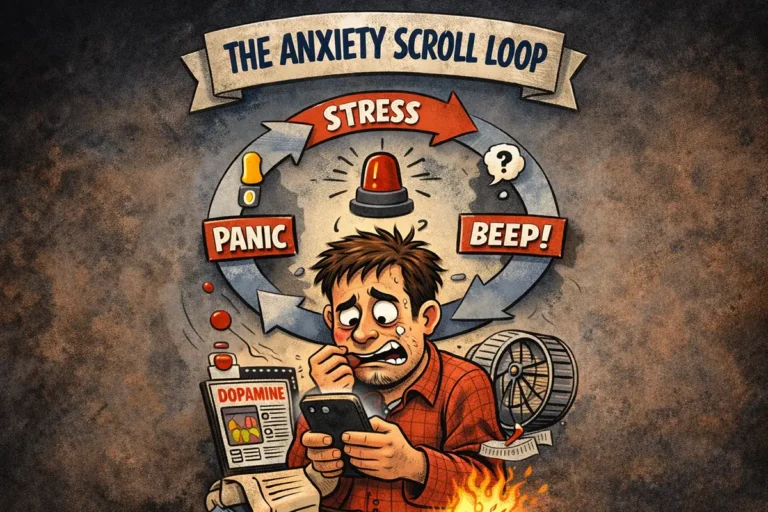
Graphic of person with anxiety from scrolling
In This Article

Doom Scrolling and Anxiety

A lot of people doom scroll to “relax.”
This is like taking espresso for a nap and being surprised by the results.

If you have ADHD, doom scrolling often creates a neat little anxiety loop that feels productive, absorbing, and terrible all at once.

Here’s how it works. You feel anxious, overwhelmed, or restless. You scroll for relief. The content activates fear, urgency, and outrage. Anxiety increases. Focus sharpens. You keep scrolling, because now at least your brain has something to lock onto.

Your nervous system mistakes activation for regulation.

By the time you realize you should stop, executive function has already clocked out. Decision-making is gone. Willpower is on a beach somewhere. Telling yourself to “just stop” at this point is like asking a fire alarm to calm down and think it through.

This is why restriction alone backfires. You can’t remove stimulation from a dysregulated nervous system and expect peace. First the body has to settle. Then the behavior can change.

Doomscrolling isn’t information-seeking. It’s regulation-seeking.

Your brain wants relief. Doomscrolling offers intensity instead and pretends that’s the same thing.

It isn’t.

The way out isn’t discipline. It’s sequence. Regulate first, redirect second.

What actually helps

  • When scrolling feels frantic, say it out loud: “This is regulation-seeking, not curiosity.”
  • Do something physical before changing apps—breathe slower, stand up, cold water, movement.
  • Replace scrolling with another form of stimulation. Nothing is not an option your brain will accept.

You’re not failing to calm down. You’re just using the wrong tool for the job.


Blog post by Dr. Jeff Levine. He is an ADHD coach with a PhD in Organized Leadership.

Share this post

Related Posts

Doomscrolling exploits our threat radar, rewarding each alarming headline with a dopamine jolt. Break the loop using five evidence-backed moves: schedule two short news windows, mute breaking alerts, ask “Is this actionable?” before reading, insert 24-hour detox sprints, and follow solution-oriented outlets to balance bias. These steps calm the amygdala, cut anxiety, and free cognitive bandwidth for real work. Pick one tactic today, log mood changes, and watch urgency shrink.
Mindless thumb-flicking and endless bad-news binges aren’t the same digital trap. Zombie scrolling is that detached, trance-like drift through random feeds, slowly draining attention. Doomscrolling is a negativity loop, chasing alarming headlines that spike anxiety. Our post unpacks the science behind both habits, shows why motivation and confidence matter, and offers quadrant-specific micro-wins - from timer tricks to values resets - to help night owl professionals reclaim focus, mood, and sustained energy daily without deleting your favorite social apps entirely.
YouTube’s autoplay can turn one quick video into an endless binge watching spiral, leaving you overwhelmed and unfocused. If you’ve ever lost hours to the algorithm, you’re not alone. This guide shows you how to reclaim control with a simple three-step routine: disable autoplay, build a “watch later” habit, and set a 3-video limit. By creating intentional boundaries, you’ll break the multitasking cycle, sharpen your focus, and free up time for what really matters.
Feeling drained by endless scrolling? You’re not alone. Platforms like TikTok and Reels are designed to hijack your attention, fragmenting focus and fueling digital fatigue. This post introduces a simple fix: the 15-minute media swap. Replace reactive scrolling with intentional, long-form content: a book, a podcast, a meaningful article. With mindful media choices, you can rebuild focus, reclaim calm, and shift from dopamine-driven distraction to deep, intentional attention.