Looking to create digital balance?
Welcome to Offline.Now! (Yes, we know we’re online.) Our goal is to help you understand how to balance your online and offline worlds.
No judgment. No spam. Just practical guidance, instantly.
Offline.now Self-Assessment
Find your Digital Balance
Welcome to Offline.Now - your place to create a healthy relationship with screens. We're here to actually make digital balance possible.
If your brain won’t shut up and scrolling leaves you more exhausted, you may be in ADHD burnout. This post explains why ADHD brains burn out differently, how screen time creates a false sense of relief, and why willpower isn’t the solution. With practical, brain-aligned strategies for protecting energy, setting boundaries, and prioritizing real rest, you’ll learn how to recover without forcing yourself to “try harder.”

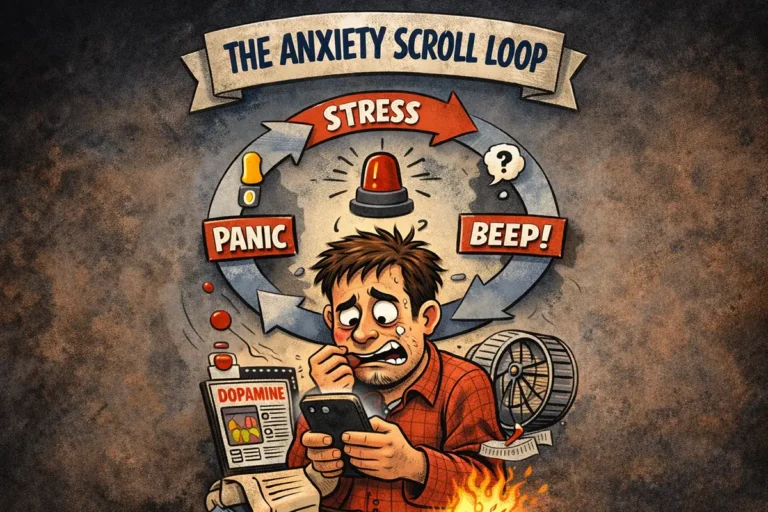
Doom scrolling doesn’t calm anxiety—it intensifies it. For ADHD brains, scrolling can become a regulation loop where fear sharpens focus and activation gets mistaken for relief. By the time you want to stop, executive function is already offline. This post explains why restriction alone fails and why the real solution is sequence: regulate your nervous system first, then redirect the behavior. It’s not a discipline problem—it’s a regulation one.
Feeling replaced by a screen can cut deeper than distraction—it can touch on desirability, safety, and emotional access. This post explores when screens genuinely erode intimacy and when they function as a coping strategy for stress, resentment, or vulnerability. Instead of focusing only on tech rules, it examines the emotional context beneath disconnection and why rebuilding safety often matters more than banning phones from the bedroom.
When screens enter a relationship, the issue isn’t usually the device itself—it’s what it amplifies. This post explores how different attachment styles respond to stress, why one partner’s scrolling can feel like rejection to another, and how emotional availability erodes quietly over time. Instead of blame or shame, it invites curiosity about what’s happening beneath the surface, reminding us that screens don’t break connection—they expose where it already feels fragile.