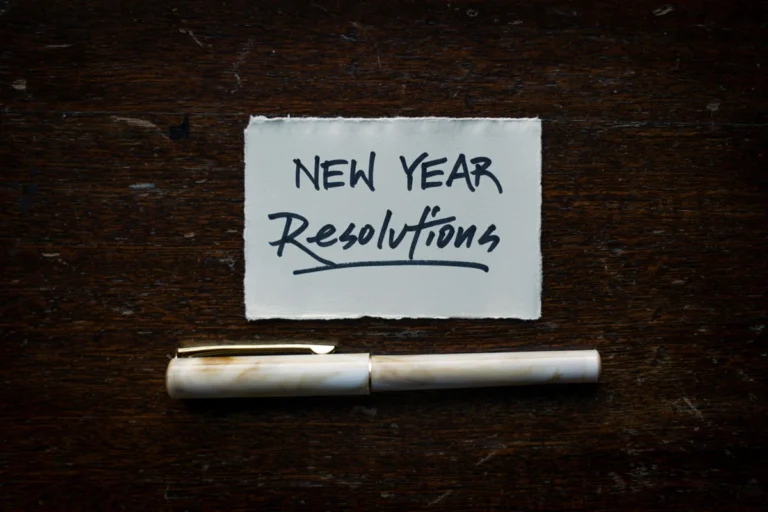
Resolutions that Stick
Every January, motivation feels infinite. You vow to quit social media, hit 10,000 steps a day, or completely reorganize your life. And then by the third week you’re tired, and the guilt creeps in.
If this sounds familiar, nothing is wrong with you. Huge resolutions collapse not because you lack discipline, but because they rely on motivation, which is famously inconsistent. What actually works is building small, friction-light systems that carry you when motivation fades.
Let’s explore how tiny rules and “If-Then” planning make realistic new year resolutions possible.
Why Big Resolutions Fall Apart
Psychologists call it the intention behavior gap, that frustrating space between wanting to change and actually doing it. Research shows that intentions account for only a fraction of successful behavior change.
Why? Because motivation drops. A lot. After the excitement of January 1st fades, habits built on sheer willpower crumble.
That’s why you need a rule, not a resolution.
Small Wins Build Emotional Momentum
When a goal is too big (“Use my phone less forever”), your brain defaults to avoidance. But when the goal is tiny and clear, confidence grows quickly.
These quick wins align with the Ready Quadrant in the Offline Matrix, high motivation supported by the steady confidence that comes from succeeding at small, doable actions.
Your brain learns: I can do this.
The “If–Then” Rule (Your Secret Weapon)
One of the most effective tools in behavior change is Implementation Intentions, or “If-Then” planning. Research across thousands of people shows it significantly improves follow-through.
You create a trigger (“If…”) and a small automatic response (“Then…”). That’s it.
Try rules like:
- If I walk into my bedroom at night, Then my phone goes on the dresser.
- If I feel the urge to check the news, Then I take three deep breaths first.
- If it’s 6:00 PM, Then I turn on Do Not Disturb.
You don’t have to debate with yourself. You just follow the rule.
Why This Helps If You Have ADHD
Traditional resolutions fail people with ADHD because they’re vague, delayed, and rely on time awareness. If-Then plans remove the ambiguity.
They give your brain:
- a clear cue
- one small next step
- no overwhelm
This reduces cognitive load and stops the mental “swirl” that makes big goals feel impossible.
Your 3-Day Tiny Rule Challenge
Skip the overhaul. Start with a micro-experiment:
- Choose one digital friction point (like scrolling in bed).
- Write one If-Then rule (“If I get into bed, then the phone stays on the dresser”).
- Test it for three days.
If it doesn’t work? That’s not failure. That’s data. Adjust the trigger or the action and try again.
Change happens when your rules get smaller—not when your goals get louder.
References
- Clear, J. (2018). Atomic Habits. Avery.
- Gollwitzer, P. & Sheeran, P. (2006). Implementation intentions and goal achievement.
- Nowack, K. (2017). Beyond goal setting to goal flourishing.
- Singer, E. (2025). Offline Now: A practical guide to healthy digital balance
*Disclaimer: Offline.now offers educational coaching tips, not medical or therapeutic advice; please consult a qualified health professional for personal, clinical or health concerns.*