ADHD, Burnout, and Late-Night Doom Scrolling
Late-night doom scrolling isn’t really about the phone.
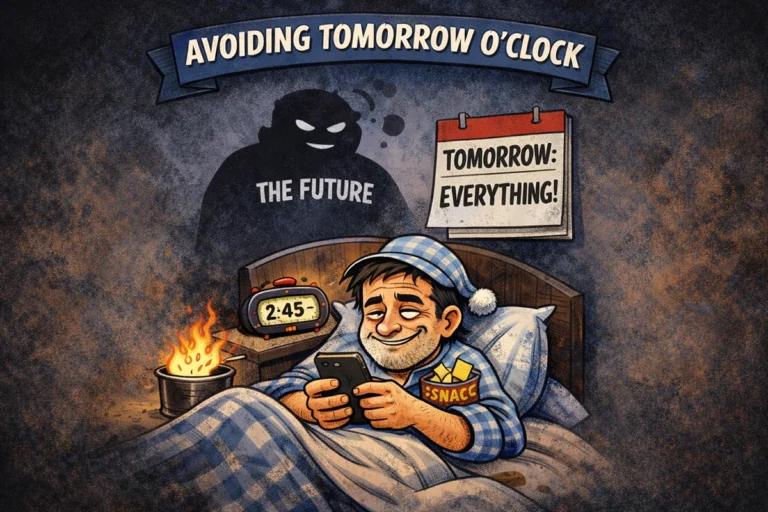
It’s about exhaustion, overload, and a tomorrow that feels like too much. When the day has been cognitively demanding and emotionally unfinished, your brain wants one thing: somewhere it can exist without expectations.
Scrolling provides that. No decisions. No productivity. No one is asking anything of you. Just endless input and the comforting illusion that you’re “winding down.”
You’re not winding down. You’re hiding.
For ADHD brains—especially ambitious, creative, entrepreneurial ones—burnout doesn’t always look like collapse. It looks like constant mental motion with no sense of completion. Open loops everywhere. Nothing ever fully done.
So at night, your brain says:
“Enough. I want something easy, endless, and responsibility-free.”
That’s not laziness. That’s self-preservation with poor planning.
Nighttime makes everything worse. Dopamine is low. Executive function is shot. Anxiety about tomorrow sneaks in while wearing socks. Doom scrolling becomes the easiest way to not think about the future without actually resting.
Which is why fixing doom scrolling starts earlier than bedtime. During the day, ADHD brains need stimulation, novelty, and visible completion. Without those, nighttime becomes a rebound disaster.
At night, the goal isn’t “no scrolling.” The goal is a clear ending and a soft landing.
What actually helps
- Finish one small, clearly defined task during the day—your brain needs proof of completion.
- Write down tomorrow’s first tiny step before bed so your brain knows where to start.
- Allow one defined scroll window, with a timer and a planned replacement.
- Move the phone far enough away to create friction, not a moral crisis. You may want to use an old-fashioned alarm clock rather than your phone so you can leave it in the other room. Smart Watches are good too, as it is really difficult!
Late-night doom scrolling is your brain asking for relief, safety, and an ending.
Give it those on purpose, and it stops asking so loudly.
Blog post by Dr. Jeff Levine. He is an ADHD coach with a PhD in Organized Leadership.