Healthy Screen Habits: A Family-First Framework We Respect

In This Article
I was recently featured on the Healthy Screen Habits podcast, and I wanted to use the moment to point attention toward their work. Healthy Screen Habits is building something families genuinely need: a clear, practical approach to screen time that reduces guilt and increases agency. Not “perfect rules.” Not panic. Just repeatable habits that help technology stay in its place. If you’re new to their organization, their Start Here page is a great on-ramp.

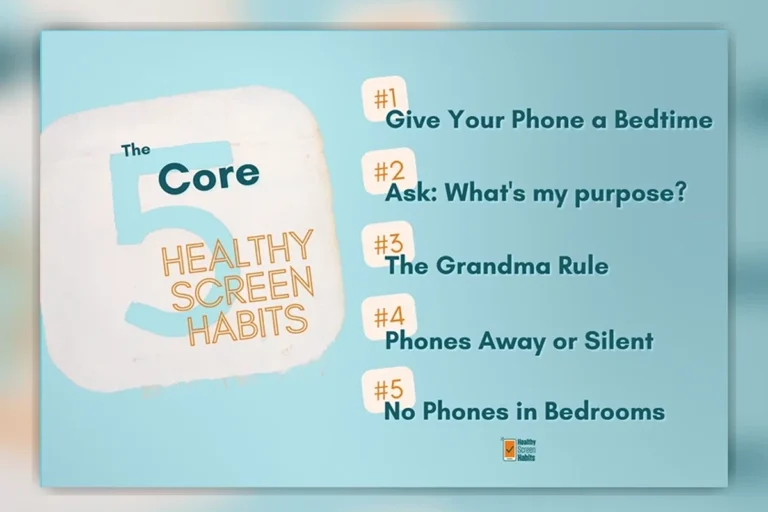
A simple place to begin: the 5 Core Healthy Screen Habits

What I appreciate most is how they’ve turned an overwhelming topic into a small set of habits you can actually practice – especially when life is busy and everyone’s tired. The framework is here: The 5 Core Healthy Screen Habits. You don’t have to change everything at once. In fact, you shouldn’t. The fastest wins come from one habit, repeated.

A weekend experiment you can try in real life

Pick one of these for 7 days – and treat it like a household “trial,” not a permanent policy:
  • One phone-free meal per day
  • A bedtime for phones (yours included)
  • Phones out of bedrooms
  • A quick purpose check before opening social: “Why am I picking this up right now?”

Keep it light. The goal isn’t control – it’s connection.

For parents and educators: their take-action work

Healthy Screen Habits also offers a clear action pathway – including their Get Phones Out of School campaign and other ways communities can get involved.

If you want to stay connected

You can subscribe to their newsletter here: Newsletter signup. And if you want to learn more about who’s behind the organization: Our Mission and Our Board.

Share this post

Related Posts

Need screen-time balance but feel drained? Start with this five-step planner: enjoy one phone-free meal, swap the last five minutes of night scrolling for a book or breath, tackle boredom with a two-minute offline substitute, silence one non-essential app, and post a sticky note listing why balance matters. Micro wins build confidence, lower stress, and spark momentum. Pick one step for tomorrow and celebrate the lift in focus and daily calm.
Digital overwhelm solutions start with acceptance, not shame. If motivation feels flat, use micro moves: power pause phones off for five minutes, leave the device outside the bedroom tonight, or read one printed page before scrolling. Label negative self talk and reframe: “I haven’t succeeded yet.” Chart offline versus online feelings to spotlight energy leaks. Each tiny win boosts dopamine, restoring momentum that nudges you from stuck toward action without requiring heroic forty eight detoxes.
Micro stressors like battery anxiety and nonstop alerts quietly raise cortisol all day. Start a 48 hour experiment: park phone three feet away while working, stash chargers in key spots, and silence one low value app. Log mood and focus every two hours. Most users report calmer breath, faster task switching, and deeper evening relaxation within days. Stack additional tweaks weekly until stress recedes to background whisper. Celebrate gains and refine boundaries that keep tech.
Digital Pomodoro method upgrades the classic 25-5 rhythm for modern remote work. Schedule three morning sprints, launch a focus app to silence notifications, and treat each block like a client meeting. After four cycles, take a twenty minute recharge then repeat after lunch. The structure combats online temptations and hazy boundaries, training attention while preserving energy. Keep phones in another room, mark calendar slots busy, and watch productivity rise as fatigue and procrastination fall away.