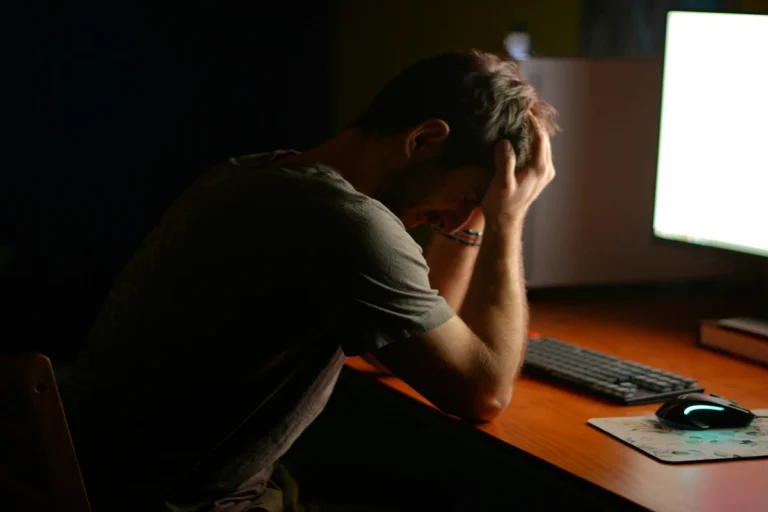
You know how to handle hard things. You have proven that, probably more than once.
But somewhere along the way, the part of you that learned to stay ready – to stay alert, to stay braced for whatever comes next – stopped being something you switch on when you need it. It became the default. And now you are alert in situations that do not require it. You are tired but cannot fully rest. You are irritable when things are actually fine. You have been told to relax, and you genuinely cannot get there.
This is not a character flaw. It is not weakness. It is a nervous system that learned to do its job extremely well – and has not yet received the signal that the conditions have changed.
That distinction matters. Because the path forward looks completely different depending on which one it is.
What survival mode actually is
Survival mode is not a mindset. It is a physiological state – a set of patterns the nervous system adopts when it has learned, through sustained experience, that the environment requires constant readiness.
Heightened alertness. Compressed emotional range. Reduced capacity for rest. A body that is always slightly braced, always scanning, always ready to respond. These are not bugs. In a high-pressure environment, they are exactly the right adaptations. They keep you functional. They keep you sharp. In some situations, they keep you alive.
The problem is that the nervous system is not a switch. It is a pattern-recognition system that updates slowly – especially when the original learning happened under sustained pressure or high stakes. The body does not simply stand down because the external conditions have changed. It stands down when it has received enough consistent signal, over enough time, that it is genuinely safe to do so.
Until it receives that signal, it keeps doing what it learned to do. Not because something is wrong with you. Because it is doing its job.
Why the pattern persists even when the pressure has lifted
Research on sustained high-alert states – including the psychological state of constant vigilance that researchers call online vigilance – finds that the nervous system maintains readiness through three interlocking dimensions: salience, the way potential threats occupy attention even in their absence; reactability, the felt pressure to respond immediately to any signal; and monitoring, the automatic scanning that runs beneath conscious choice.
Research found that this vigilance state was negatively associated with mental health through stress as a full mediator – and that it held regardless of age or gender. This is a broadly human pattern. The nervous system that learned to stay ready in a demanding environment is doing the same thing as any nervous system that has been trained to maintain alertness. The mechanism is the same. The intensity and the origin story differ.
What this means practically is that the pattern is not maintained by conscious choice. It is maintained by the body’s best current read of what the environment requires. Changing it is not a matter of deciding to relax. It is a matter of giving the nervous system enough new information, consistently enough, that it begins to update that read.
That is a different project than willpower. And it is a more honest one.
What the body keeps
The nervous system encodes survival patterns in the body, not just in conscious memory. That is why cognitive reframing alone – telling yourself that things are fine now, that the threat has passed, that you are safe – often does not move the needle on survival mode. The body is not listening to that conversation. It is running on a deeper layer of learned response.
The path toward steadier ground runs through sending the nervous system new information at the level where the pattern lives – through the body, through behavior, through consistent experience of safety rather than through argument or insight alone.
This is not a slow or complicated process. But it does require consistency. And it requires starting where you actually are, not where you think you should be.
Three things that help the nervous system begin to update
These are not relaxation techniques. They are signals – small, consistent actions that give the nervous system new data about the current environment. The goal is not to force calm. The goal is to build enough evidence, over time, that the body begins to trust that standing down is safe.
Complete the stress cycle deliberately. The nervous system moves through stress in a physical arc – activation, peak, resolution. In high-pressure environments, that arc often gets interrupted before resolution. The activation stays in the body. Physical movement – a walk, a workout, anything that brings the body to a natural point of tiredness and rest – helps complete the cycle and gives the system a genuine experience of resolution rather than just suppression. This is not about exercise as a productivity tool. It is about giving the body the ending it did not get.
Create one genuinely low-stakes moment per day and stay in it. Not a scheduled break. A moment where nothing is required of you, where you are not monitoring for anything, and where you allow yourself to notice that nothing is coming. It can be five minutes. The point is not the duration. The point is the experience – repeated often enough that the nervous system begins to register it as real data rather than an anomaly. Safety, practiced consistently, is how the body learns that safety is available.
Name what is actually happening when the alertness spikes. Not to judge it. Just to observe it. Something like: my nervous system is responding as if there is a threat here. Is there one? That small act of noticing – separating the physiological response from the actual current situation – creates a gap between the signal and the reaction. Over time, that gap gets wider. And in that gap is where genuine choice begins to live.
If the pattern feels deeply entrenched
Some people can begin to move through survival mode with the right information and consistent practice. Others find that the pattern is woven deeply enough into their daily functioning – their relationships, their work, their ability to rest – that moving through it alone is slow and discouraging.
If that is where you are, working with someone who understands this pattern – not just clinically, but from the inside – can make the process feel less like fighting yourself and more like learning something new. Real relief is possible. It does not require white-knuckling through every day.
If you want to talk about what that support might look like, you can learn more about working with me at Therapy By David. Book a 15-minute call to see if we are a good fit – no commitment, no pressure, just a conversation about where you are and where you want to be.
When to reach further now
If what you are carrying feels too heavy to manage on your own, or your safety feels shaky, please reach out to a licensed professional or local crisis support sooner rather than later. If there is immediate risk of harm, contact local emergency services or a crisis line right away.
This is general information, not personal therapy or medical advice. If symptoms are severe, persistent, or significantly affecting your daily functioning, please consider speaking with a qualified professional.
This is general information, not personal therapy or medical advice. If symptoms are severe or persistent, please consider speaking with a qualified professional.
Grounded in the practical, no-pressure approach David Robles, LMSW – Army Veteran and trauma-informed therapist – uses when discussing life stress, burnout, and resilience in his public-facing materials.
References
Petkovski, M., Rosen, C., Lehmann, N., Baune, L., Steinrucke, J., and Dominguez-Rodriguez, A. (2025). The relationships between online vigilance, mental health, stress, and fear of missing out: A cross-sectional study. Acta Psychologica, 260, 105577. https://doi.org/10.1016/j.actpsy.2025.105577
Marx, J., Mirbabaie, M., and Turel, O. (2025). Digital detox: A theoretical framework and future research directions for Information Systems. Information and Management, 62, 104068. https://doi.org/10.1016/j.im.2024.104068
van der Kolk, B.A. (2014). The Body Keeps the Score: Brain, Mind, and Body in the Healing of Trauma. Viking.
Porges, S.W. (2011). The Polyvagal Theory: Neurophysiological Foundations of Emotions, Attachment, Communication, and Self-Regulation. Norton.
Southwick, S.M., and Charney, D.S. (2012). Resilience: The Science of Mastering Life’s Greatest Challenges. Cambridge University Press.