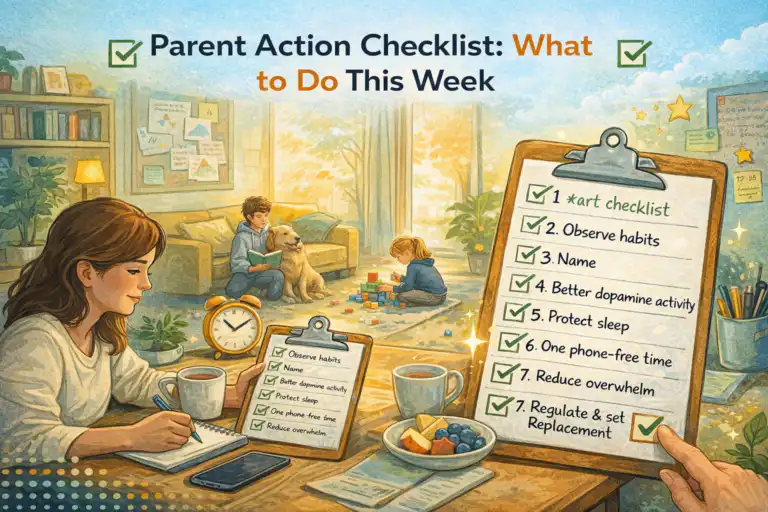
Try not to overthink it. Begin with small steps and focus on being consistent.
1. Observe Before You Intervene
- When is your teen on their phone the most?
- After school? Late at night? After social interactions?
Pay attention to any patterns you notice. Stress often shows up in certain habits.
2. Name What You See (Without Accusing)
Say: “I’ve noticed you’ve been on your phone a lot more after school. Is that when things feel the most stressful?”
Being curious helps start conversations, while judging can make your teen shut down.
3. Add One “Better Dopamine” Activity
You don’t need to change everything at once. Just introduce one:
- Walk together after dinner
- Gym session
- Shooting hoops
- Music, art, building something
Keep things low pressure. Being consistent matters more than being enthusiastic.
4. Protect Sleep (Non-Negotiable)
- Set a charging spot outside the bedroom
- Start with 3-4 nights a week if needed
When your teen doesn’t get enough sleep, it’s harder for them to manage their emotions, and they may use their phone even more.
5. Create One Phone-Free Window Daily
Start small:
- Dinner
- First 30 minutes after school
- Car rides
This helps your teen get used to having some time without constant stimulation.
6. Reduce One Source of Overwhelm
Ask yourself:
- Is their schedule overloaded?
- Too many expectations?
- Not enough downtime?
Easing some of the pressure in their life can be more effective than just taking away screens.
7. Co-Regulate First, Set Limits Second
If they’re dysregulated:
- Stay calm
- Lower your tone
- Be present
Then set the boundary. Regulation before discipline. Always.
8. Don’t Remove the Phone Without a Replacement
If you take away their main coping tool, you need to offer another. Otherwise, expect:
- Pushback
- Shutdown
- Escalation
Replace, don’t just remove.
The Bottom Line
You don’t need to “win” against the phone. You need to:
- Lower the stress
- Rebalance the dopamine
- And give your teen better ways to feel okay
Start there.
This is general parenting guidance, not individualized mental health care. If safety concerns are present or things feel unmanageable, seek local professional support.
About the author: Siobhan Chirico, MA, RP, OCT, is a Burlington-based registered psychotherapist and educator specializing in child and family therapy. She is the author of Climbing Crisis Mountain and a regular contributor to Today’s Parent. Learn more at climbingcrisismountain.com or visit her Offline.now profile.