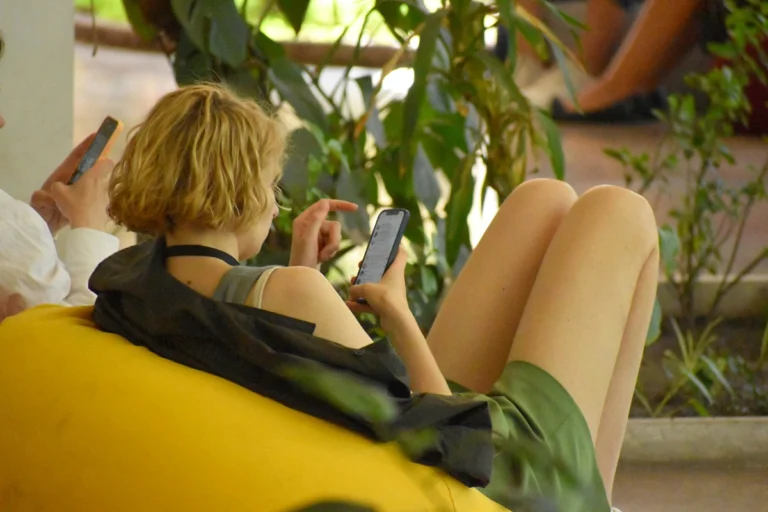
You picked up the phone to check one thing. Forty minutes later you’ve read every bad headline twice, and you feel worse than when you started.
What can you do instead of doomscrolling?
Pick something that does the same job and has an end. If you wanted the news, a newspaper has a last page. If you wanted to switch off, one album runs for forty minutes and stops.
The fifteen alternatives below are sorted by what the scroll was giving you. They come from our list of 100 things to do instead of scrolling.
What was the doomscroll doing for you?
Find the row that sounds like you, then try the idea beside it. If plain boredom is the reason, see things to do when bored without your phone.
| You scroll to | The feed gives you | Try this instead |
|---|---|---|
| Keep up with the news | Headlines with no end | Browse a magazine or newspaper (No. 94). It ends. |
| Switch off | Rest without effort | Sit by a window and do nothing for five minutes (No. 1) |
| Feel less alone | Other people’s voices | Handwrite a note to someone you haven’t talked to in a while (No. 61) |
| Keep your hands busy | Something to do | Play with clay or kinetic sand (No. 23) |
| Put something off | A way out of the task | Clean one window (No. 32), then go back |
What are 15 alternatives to doomscrolling?
If you want to know what’s going on
- Browse a magazine or newspaper (No. 94)
- Visit a local bookstore or library (No. 54)
- Interview a friend or family member about their life (No. 62)
If you need to switch off
- Sit by a window and do nothing for five minutes (No. 1)
- Watch birds or clouds from a window (No. 6)
- Listen to a full album start to finish (No. 79)
- Take a bath or shower with no time limit (No. 77)
If your hands are restless
- Play with clay or kinetic sand (No. 23)
- Try origami or paper folding (No. 24)
- Wash dishes by hand and let it be meditative (No. 12)
If you want company
- Handwrite a note to someone you haven’t talked to in a while (No. 61)
- Play a card game or dominoes (No. 64)
- Bake something and give half away (No. 65)
If you’re putting something off
- Clean one window (No. 32)
- Reorganize a drawer or shelf (No. 41)
What can you replace doomscrolling with at night?
Something that ends by itself and needs almost no light. Reread a book you already love, or lie down and listen to your breathing. There are twelve ideas in what to do before bed instead of scrolling.
How do you make an alternative stick?
Decide ahead of time, in one sentence. “When I catch myself on the news after dinner, I put on one album.” What to do instead of scrolling, and how to make it stick explains why that sentence helps and what the research says.
For the habit itself, see how to stop doomscrolling and doomscrolling: what it means, what it does, how to stop. If the news is what wears you down, see News Fatigue? Stay Informed Not Exhausted.
When to get extra help
If the news leaves you on edge most days, or it keeps up or feels like too much, a professional can help. Offline.now has a directory of experts who work on this.
This is general information, not medical or psychological advice.
Frequently asked questions
What is a healthy alternative to doomscrolling?
One that gives you what you wanted from the feed and then stops. A newspaper covers the news and ends. A note to a friend covers the company.
What hobbies can replace doomscrolling?
Ones you can start in ten minutes with what you have. Sketching and paper folding are two. There are fourteen in analog hobbies.
What can I do instead of doomscrolling in the morning?
Do one small thing before the phone. Look up at the sky for 60 seconds, or make your bed slowly. There are ten ideas in what to do in the morning instead of scrolling.
About Offline.now
Offline.now offers free help with your phone habits. It starts with two questions. Your answers show your type and a first step small enough to take this week. Find your starting place.
The ideas here come from the book Offline.now: A Practical Guide to Healthy Digital Balance by Eli Singer. The book is on Amazon.