What you measure moves. This page helps you pick a few meaningful signals – sleep, mood, focus – track lightly, and review weekly. You’ll keep useful data and skip the noise.
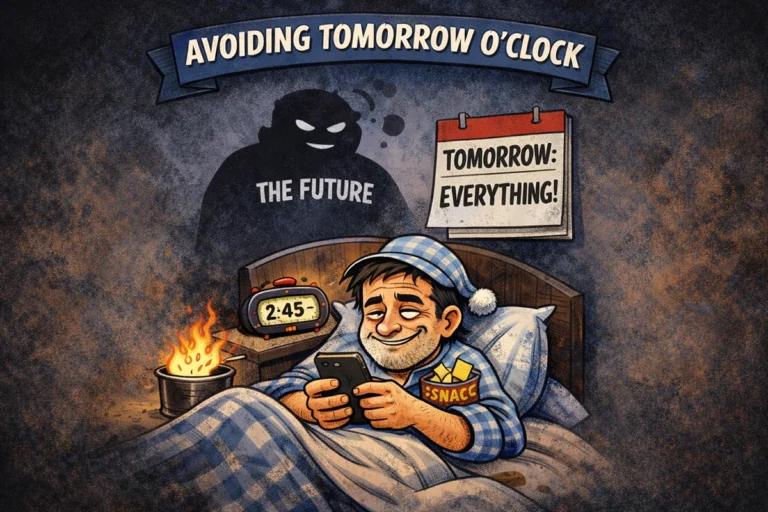
Late-night doom scrolling isn’t really about the phone—it’s about exhaustion, unfinished tasks, and an ADHD brain searching for relief. When the day feels overwhelming and nothing feels complete, endless scrolling offers easy stimulation without expectations. This post explores why burnout and ADHD make nighttime scrolling so common, and how small daytime shifts—like visible task completion and planned endings—can help your brain finally power down instead of staying stuck in the scroll.
Most of us want change without discomfort, yet friction is often the first sign that something new is beginning. This post explores what it truly means to be “change ready,” why mindset matters more than willpower, and how resistance signals growth rather than failure. By shifting your internal narrative and reclaiming a sense of agency, you can move out of old patterns and toward meaningful, sustainable change—even in a world designed to keep you comfortable and distracted.
Late-night symptom searching often starts with reassurance and ends in panic. When uncertainty meets endless medical content, anxious brains fixate on worst-case explanations—a pattern known as cyberchondria. Fatigue, doomscrolling, and reduced self-control at night make the spiral worse, not better. This piece explains why “just Googling it” backfires and offers a gentle Pause and Ground approach to interrupt the loop, protect your nervous system, and regain calm without ignoring your health.
Winter’s long, dark evenings can quietly pull us into hours of scrolling that leave us more tired, not less. This post explores why winter screen time hits differently, how dopamine, blue light, and sleep disruption play a role, and why it’s not a willpower issue. Most importantly, it offers gentle, realistic swaps no rigid rules that help you restore energy, improve mood, and find comfort that truly replenishes you during the colder months.
Feeling mentally scattered or overstimulated? You might be experiencing cognitive load anxiety; the hidden stress of constant switching and information overload. This guide helps you recognize digital fatigue, uncover overwhelm triggers, and use simple reflection prompts to reclaim clarity and focus. Learn how to turn mental clutter into insight, build small daily wins, and move from feeling drained to feeling calm, capable, and in control of your attention.
In a world where every scroll feels like a performance review, it’s easy to confuse self-worth with digital validation. Comparison fatigue creeps in as polished feeds and curated lives whisper, “You’re not enough.” But confidence isn’t built on likes, it’s reclaimed through presence. By setting small digital boundaries, reconnecting with authentic offline moments, and redefining success beyond screens, you can quiet the noise and rediscover the steady confidence that was always yours.