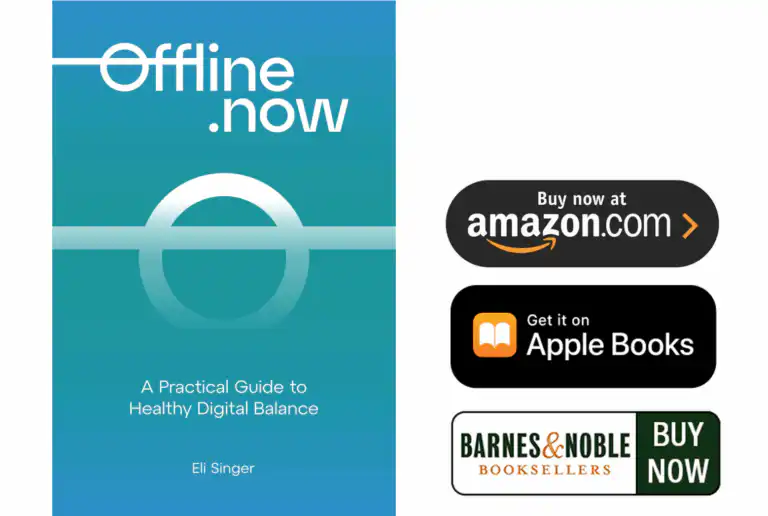
Offline.now: A Practical Guide to Healthy Digital Balance - book by Eli Singer, with Amazon, Apple and Barnes & Noble Buttons
In This Article

If “just a minute” on your phone quietly becomes forty-five, this book is for you. Offline.now: A Practical Guide to Healthy Digital Balance is available on Amazon, Apple, Kobo and Barnes and Noble.

Why I wrote it

I’ve spent most of my life up close with the web – building communities, watching the social web evolve, and noticing how “always-on” crept into every corner of life. A few years back I shifted into mentor coaching and got a late ADHD diagnosis, which sharpened my view of how differently each of us engages with tools that weren’t always designed for our brains. The Offline.now Matrix grew from that work – a simple way to meet you where you are, without guilt, and help you start small.

What’s inside

  • A quick self-check – the Offline.now Matrix – to map your motivation and confidence, then choose the next right step.
  • Short, micro chapters with Key Takeaways and Next Steps so you can act the same day.
  • Practical strategies to tame notifications, create phone-free zones, and reconnect with offline life.

A note of thanks

This project is community-built. Thanks to Iris Glaser; my parents and siblings Bonnie, Ernie, Rachel, and Arieh; David Crow and Peter Evans; the University of Toronto community; the global network of coaches, therapists, ADHD professionals, and neurodivergent thinkers who shaped this work; Amy Lester and Robert Henry for helping bring the platform to life; and Randall Van Gerwen for turning sketches into a living visual identity.

I’d love your feedback!

Start with the 2-question check, pick one tiny experiment, and notice what changes. Then come say hi at Offline.now.

Share this post

Related Posts

Feeling tethered to notifications yet anxious to unplug signals a digital diet gone sour. Real balance lets tech serve clear goals instead of stealing attention, sleep, and relationships. Begin with a one-day pickup audit, block phone-free meals, create bedroom and dining no-phone zones, and pause before each tap to ask why. Small, intentional boundaries compound into calmer mood, sharper focus, and richer conversations—without banning the devices you still need.
Feeling overwhelmed by screens doesn’t mean you lack willpower. Apps are engineered for frictionless relapse. This post rebuilds confidence through tiny wins: delete three derailment apps for a week, charge the phone outside the bedroom to enjoy a screen free sunrise, and track each resisted check in a notebook. Each micro victory triggers dopamine and proves you can steer habits. Celebrate, breathe, repeat - gentle momentum lifts you from overwhelmed toward ready for bigger moves.
You’ve nailed the basics and crave a stretch goal. Advanced balance starts here. Try a 30 day social sabbatical, batch notifications into two ten minute windows, or level up accountability with screen time screenshots and playful stakes. Flow theory says challenge matching skill sparks engagement, so these tactics keep motivation high without burnout. Review progress monthly, adjust pace, and share wins to mentor others. Growth shifts from restraint to intentional tech minimalism that energizes life.
Stuck doesn’t equal failure; it signals low energy and confidence. Lift mood first: jot one gratitude snapshot, soak two minutes of sunlight, or breathe three deep breaths. When brighter, slip in five minute phone exile or color coded mood calendar without judgment. Small, repeatable wins release dopamine, rebuild belief, and create momentum. Consistency beats intensity. Pebble upon pebble forms a path. Gentle persistence turns the wheel, nudging you from stuck to overwhelmed, then ready soon.