Blog

Welcome to the Offline.now Blog - your trusted resource for navigating digital detox and reclaiming balance.

Explore daily insights into managing phone stress, reducing screen time, curbing doomscrolling, and practical digital wellness strategies. Let our science-backed tips and expert advice empower you to build a healthy relationship with technology.
Individual therapy can help you understand the deeper patterns behind recurring relationship conflict. By building emotional awareness, recognizing stress responses, and exploring past experiences, therapy can create more space to communicate honestly, respond differently, and feel more connected in your relationships.
If reading used to feel effortless but now you find yourself reaching for your phone instead, you're not alone. This article explores how constant scrolling reshapes your attention, why books feel harder to focus on, and the simple, research-backed habits that can help you rebuild a sustainable reading routine, without relying on willpower or a complete digital detox.
Build a healthier relationship with your phone without another app, detox, or complicated system. Learn how small, low-friction changes can reduce mindless scrolling and make healthier phone habits easier to maintain
Constant phone use can drain more than your time, it can fragment your attention, increase low-grade stress, and interfere with sleep. For high-achieving women balancing demanding careers, caregiving, and constant reachability, a few practical boundaries can make a meaningful difference without requiring a dramatic digital detox.
If your phone is keeping you awake, the solution is rarely a single setting or a dramatic digital detox. Phone-related insomnia is driven by both screen light and mental stimulation, so what works best is a repeatable system: set a specific cutoff, change your environment, replace the habit with a low-effort wind-down activity, and build the change gradually. The goal is not perfection or more willpower, it’s finding a starting point small enough to actually stick.
If you find yourself reaching for your phone every night, it may have less to do with willpower than with how deeply the habit is tied to your routine, reward, and need for relief. Bedtime scrolling can feel automatic, especially when you're tired, stressed, bored, or trying to reclaim a little personal time at the end of the day. The good news is that breaking the loop doesn't require a dramatic reset. Small environmental changes, realistic routines, and a starting point that matches your confidence can make lasting change much more achievable.

If you have tried app limits, digital detoxes, and countless “fresh starts” but still find yourself reaching for your phone on autopilot, the problem may not be your discipline, it may be the system around the habit. This guide explains why common approaches fail and offers a practical, research-informed way to reduce unconscious phone use by identifying triggers, changing your environment, creating specific if-then plans, and building small habits you can actually sustain.
Online attachment quizzes may offer quick labels, but they often miss how modern digital habits can intensify relationship anxiety. This article explores the clinical roots of attachment and how constant connectivity, read receipts, instant reassurance, dating apps, and digital availability can amplify insecurity. It also shares practical strategies for creating healthier communication boundaries and building greater emotional safety in adult relationships.
When ADHD affects the rhythm of family life, mornings, homework, transitions, and bedtime can quickly become sources of daily stress. ADHD parent coaching can help by turning those pressure points into practical, repeatable systems. From routine-building and executive function support to behaviorally informed strategies and caregiver consistency, the right coaching can help families reduce chaos, strengthen follow-through, and create a calmer home environment, without expecting perfection.
Rebuilding confidence after midlife divorce starts with small, intentional steps. From creating new routines and making postponed decisions to practicing self-kindness and seeking the right support, women can gradually rebuild self-trust, clarity, and a steadier sense of self for the next chapter.
Entrepreneurs often know exactly what they want to accomplish but struggle to turn competing priorities into consistent action. ADHD coaching with structured accountability can help by making priorities clearer, breaking large goals into manageable steps, and creating practical systems for meeting deadlines. For business owners dealing with time management, focus, and follow-through challenges, the right coaching support can make it easier to protect important work from constant distractions and build habits that last.
When work pressure, digital overload, caregiving, and everyday uncertainty start to feel overwhelming, finding the right support can make a meaningful difference. This guide explores how to recognize when stress may be affecting your wellbeing, what to look for in a therapist, and why personalized, Gestalt-informed care can help you build greater self-awareness, self-compassion, and emotional space.
We often talk about screen time affecting mood and focus—but emerging research suggests it may also impact chronic inflammation. A University at Buffalo study found higher social media use predicted increased CRP, a key inflammation marker. Blending research with personal experience, this post explores how stress activation, poor sleep, and sedentary scrolling may affect the body—and shares practical, realistic steps to reduce digital stress and support long-term health.
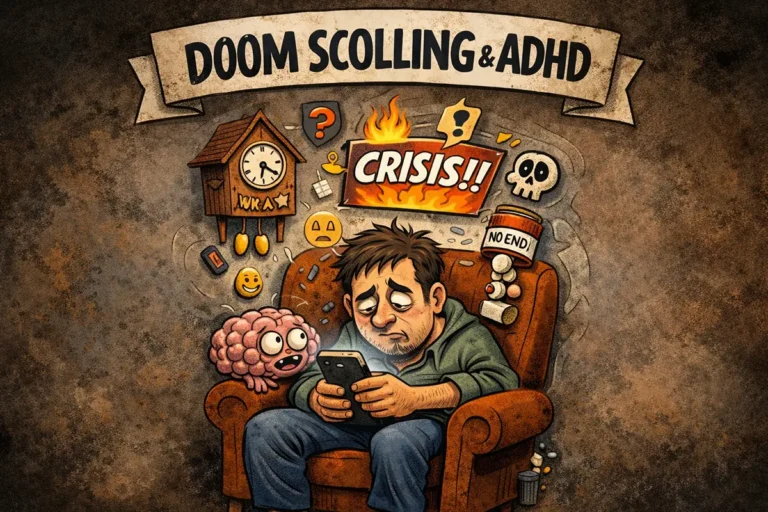
If you have ADHD, doom scrolling isn’t about laziness or poor discipline—it’s what happens when a novelty-seeking brain meets infinite scroll and threat-based content. This post breaks down why ADHD brains are especially vulnerable to doom scrolling, how anxiety can hijack attention, and why shame doesn’t work. Instead of “scroll less” advice, you’ll learn how to change the environment, add real stopping cues, and give your brain somewhere safe to land.
Are Snapchat and TikTok actually dangerous for teens? The real risk isn’t the apps themselves—it’s how they blur privacy, permanence, and performance in ways adolescent brains aren’t equipped to manage. Drawing on clinical work and lived parenting experience, this post explains how online harm often unfolds, why shame makes safety worse, and how families can use practical, non-judgmental tools to help teens protect their agency, make safer choices, and ask for help before mistakes become permanent.
Most of us want change without discomfort, yet friction is often the first sign that something new is beginning. This post explores what it truly means to be “change ready,” why mindset matters more than willpower, and how resistance signals growth rather than failure. By shifting your internal narrative and reclaiming a sense of agency, you can move out of old patterns and toward meaningful, sustainable change—even in a world designed to keep you comfortable and distracted.
Even with constant contact, many of us still feel alone. Digital messages keep us informed, but they don’t always make us feel known. This post explores why digital closeness can’t replace real intimacy—and how passive scrolling, texting, and divided attention quietly erode connection. Learn the difference between “warm” and “cold” interactions, why presence matters more than frequency, and three simple rituals to turn everyday communication into deeper, more satisfying relationships.
Late-night symptom searching often starts with reassurance and ends in panic. When uncertainty meets endless medical content, anxious brains fixate on worst-case explanations—a pattern known as cyberchondria. Fatigue, doomscrolling, and reduced self-control at night make the spiral worse, not better. This piece explains why “just Googling it” backfires and offers a gentle Pause and Ground approach to interrupt the loop, protect your nervous system, and regain calm without ignoring your health.