Updated October 11, 2026. This guide was revised with new data: a 2026 meta-analysis of 63 studies on smartphone use and sleep, and a 2026 national survey on how many adults say the phone hurts their sleep. First published August 21, 2026.
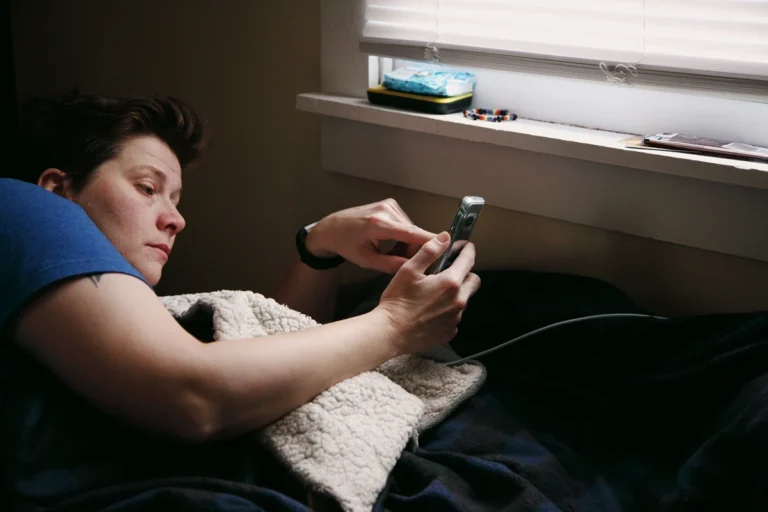
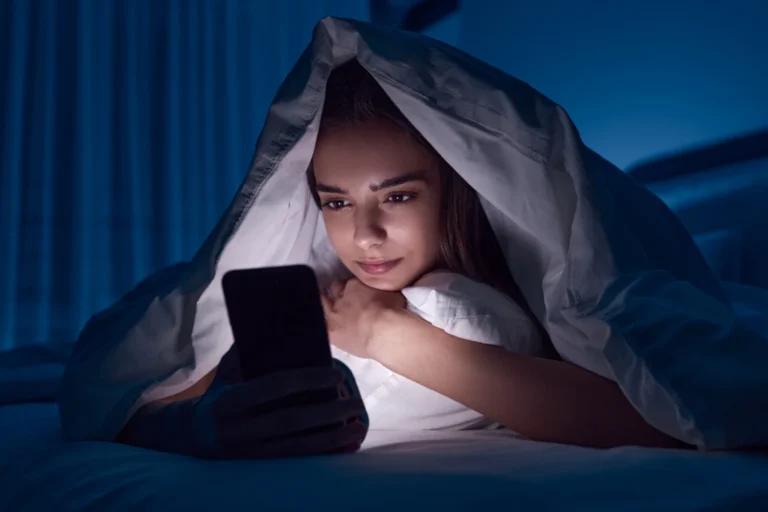
Your phone is the last thing you look at every night. You know it. You have told yourself to stop a dozen times, and the scroll still runs until your eyes give out.
You are dealing with a behavior that fits the moment almost perfectly, and the research says the cost is real and the habit is common. Pooling 63 studies of 18 to 25 year olds, Okunlola and colleagues (2026) found a moderate link between problematic smartphone use and poor sleep, with later sleep onset, shorter sleep and worse daytime function. Among U.S. adults, 41 percent say their phone hurts their sleep, and among adults aged 30 to 49 the figure is 52 percent, according to the Pew Research Center (2026).
The Offline.now Matrix is a self-reflection framework that maps your motivation to change your phone habits against your confidence that you can, and sorts the result into four types, each with its own starting place. The type that fits most people who struggle with bedtime scrolling is Overwhelmed: Overwhelmed means high motivation and low confidence, so you genuinely want to change, and what you’ve tried hasn’t stuck. The issue is rarely ignorance. The failure record damages confidence, and damaged confidence is what makes the next attempt feel harder before it starts. Lasting change runs on confidence, not willpower.
Bedtime phone checking usually runs on two tracks at once. Sometimes it is about the phone itself: the alerts, the feeds, the one-more-scroll design. Sometimes it is about what the phone helps you avoid, such as stress, boredom, loneliness, or the uneasy feeling of ending the day. Both can be true at the same time, and both matter for understanding what to actually do about it.
Why does bedtime phone use become automatic?
Because the cue is so consistent. Same room, same bed, same tired brain, same reach for the device. Repetition in a stable context is exactly how habits take hold. Research on habit formation found a median of 66 days for a behavior to feel automatic, with a wide range of 18 to 254 days (Lally et al., 2010). That range is important: it explains why stopping can feel slow even when motivation is high, and why missing one night does not derail the whole process.
For many adults, the phone is also where work, family logistics, and emotional loose ends live. The tired parent checking school messages and the burned-out manager checking email may look similar from the outside, but the drivers are different. A solution that works for one may not fit the other.
What keeps pulling you back to the screen?
The reward is unpredictable
Phones are powerful habit machines partly because the reward is inconsistent. Sometimes there is a useful text, sometimes a funny post, sometimes nothing, sometimes a stressful email. That unpredictability keeps the checking loop alive. You are not rewarded every time, which is exactly what makes the behavior sticky. Your brain learns that checking might pay off, so it keeps suggesting the behavior.
This is where popular “dopamine” talk often gets oversimplified. The more accurate framing is that reward-learning systems respond strongly to intermittent rewards. The scroll is about the possibility of getting something, and that possibility is engineered to be compelling.
The phone can feel like relief
Night is also when unprocessed thoughts get louder. Worry, boredom, overstimulation, and plain exhaustion can all make a phone feel soothing. The phone distracts, fills silence, and postpones the moment when you have to be alone with your thoughts. That does not mean bedtime scrolling signals a mental health condition. It means the phone often works as a fast coping tool, and fast coping tools are hard to replace with something slower.
Bedtime procrastination plays a role
Some people are delaying bedtime on purpose because it feels like the only personal time left in the day. If your evenings feel stolen by work, caregiving, or constant demands, scrolling can feel like taking a little back, even when it leaves you more drained. Recognizing that framing matters, because the solution is also finding another way to protect that time, and removing the phone alone will not do it.
Why does sleep suffer, even when the phone feels relaxing?
The sleep impact comes from more than one mechanism. Light is part of it, but content and timing matter too.
Screens emit short-wavelength light that can affect the body’s natural wind-down signals and make it harder to fall asleep. But a dimmed phone showing emotionally engaging or stressful content can keep your mind activated regardless of the screen setting. A randomized controlled trial found that blocking mobile internet for two weeks improved sustained attention by roughly the equivalent of 10 years of age-related decline, alongside meaningful gains in mental health and well-being. Ninety-one percent of participants improved on at least one of those outcomes (Castelo et al., 2025).
The same study found that without mobile internet, participants spent an average of 161 daily screen minutes during the block, down from 314 before. Within two weeks of the block ending, that figure had rebounded to 265 minutes. The rebound is the pattern to plan for. Dramatic pauses tend to reset rather than rebuild, which is why the approach that lasts runs on confidence rather than restriction. For the wider numbers on phones and time, see the Offline.now phone habits statistics.
What does the latest research add?
A size for the link, and an honest limit on it. Okunlola, Lenka, Singh, Awasthi, Sharma and Chanchal (2026) reviewed 68 studies of smartphone addiction and sleep in 18 to 25 year olds and pooled 63 of them. The combined correlation between smartphone addiction scores and poor sleep quality was 0.38, which is moderate, with a confidence interval of 0.31 to 0.48. The studies consistently found later sleep onset, shorter sleep, poorer overall sleep quality and more daytime dysfunction among people who used their phones most heavily. Tests for publication bias came back clean.
Three limits travel with that number. The studies were almost all cross-sectional and self-reported, so they cannot say the phone caused the poor sleep rather than the reverse, and the authors say so. The studies disagreed with each other a great deal, which is usual when 63 studies from different countries are combined. And the sample was 18 to 25, so the number describes young adults. For adults over 30 the Pew figure above is the best current signal, and it is a perception, not a measurement: half of adults aged 30 to 49 say the phone hurts their sleep.
What this changes about the advice: nothing about direction, and something about size. The link between heavy night use and poor sleep is moderate and consistent, and it comes from dozens of studies rather than a few. The step below is worth taking even if it only recovers part of it.
What actually helps break the loop?
Lasting change runs on confidence, not willpower: start where you actually are, with a step small enough to win. The most reliable approach is to redesign the routine so the cue, the behavior, and the reward all shift together.
| What happens at night | Why it happens | A better adjustment |
|---|---|---|
| You reach for the phone automatically in bed | Bed has become a cue for checking | Charge the phone across the room or outside the bedroom |
| You say “just five minutes” and lose 45 | Intermittent rewards keep you engaged | Use Do Not Disturb or grayscale before bed; set a no-phone buffer time |
| You feel uneasy without the phone | The phone is acting as emotional relief | Replace it with a calming, repeatable routine you will actually do |
| You keep restarting after failed attempts | The plan was too big or too vague | Start with a 15-minute buffer and a specific if-then plan |
Change the environment first
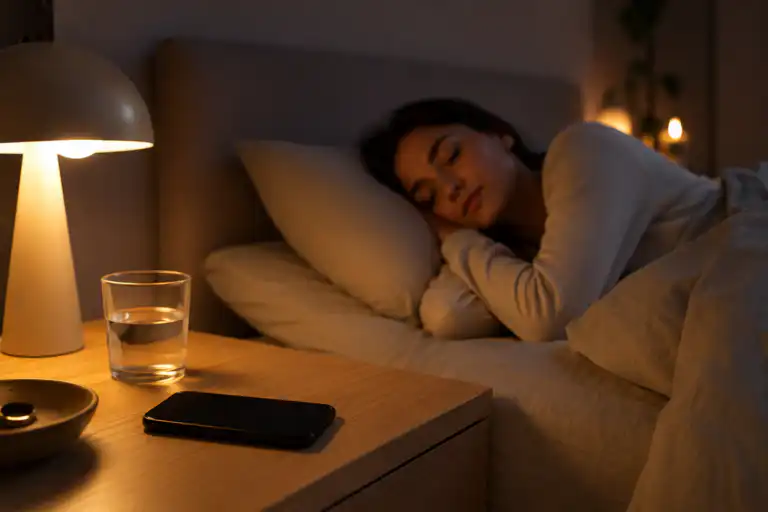
Make the behavior slightly less easy. Put the phone out of arm’s reach. If you use it as an alarm, consider a separate clock, or place the phone far enough away that scrolling requires getting up. The goal is to keep the bed associated with sleep. A physical change to the environment does more than a mental resolution made while already tired.
Replace, don’t just remove
If the phone currently gives you relief, removing it without a replacement creates a gap your brain will fill somehow. Choose one short wind-down routine that is predictable and low effort: reading a paper book, or writing a few lines in a notebook. The replacement needs to feel genuinely calming. If it feels like a chore, it will not last past the first week. If the phone is out of the bedroom and sleep still will not come, read what helps with insomnia from night phone use.
Use small, specific plans
Large resets often fail because they depend on energy you do not have at night. A smaller plan holds better. Implementation-intention research, which involves deciding in advance exactly when and where you will act, improved goal attainment with an effect size of d = 0.65 across 94 studies (Gollwitzer and Sheeran, 2006). A workable version: “If I get into bed and reach for my phone, then I will put it on the dresser and read two pages instead.” Specific, and small enough to repeat.
What is a more realistic way to think about the habit?
Many people feel ashamed that they cannot stop checking, especially after promising themselves they would do better tonight. That shame usually makes the loop worse. It adds stress, and stress sends you straight back to the easiest available relief.
A more useful frame: the habit makes sense, even if it is not serving you anymore. Fifty-three percent of U.S. adults say they spend too much time on their smartphone (Pew Research Center, 2026). If this struggle feels familiar, that is because it is. The question is whether you are starting from the right place for where you actually are.
The free quiz at Offline.now takes two questions and less than a minute. It shows you your type, whether that is Stuck, Overwhelmed, Ready, or Unconcerned, and points you to your starting place. The Find Your Starting Place worksheet does the same thing on paper: one page, free to download, no account required, available at over 130 Canadian library branches. After the quiz, the Offline.now Program is the next step.
If the sleep loss is affecting your days, or the phone is covering worry that does not lift in the morning, a conversation with a qualified practitioner helps. The Offline.now directory lists therapists and coaches who work on tech-induced insomnia. For the daytime side of the same habit, see what actually works for phone addiction when nothing else has.
Frequently asked questions
Why do I find it so hard to stop checking my phone at night?
Because the behavior is cued by routine, reinforced by unpredictable rewards, and often used for emotional relief. Tired brains prefer easy rewards, and phones are engineered to deliver them. The failure record most people carry is evidence about step size, not about character.
Does phone use before bed actually affect sleep?
Yes, with a moderate and consistent link in the research. A 2026 meta-analysis of 63 studies in 18 to 25 year olds found a correlation of 0.38 between smartphone addiction and poor sleep quality, with later sleep onset and shorter sleep the most common findings. The studies were mostly cross-sectional, so they show a link rather than proving the phone is the cause.
What actually helps with insomnia caused by phone use at night?
The most effective changes are environmental and behavioral. Move the phone out of arm’s reach, set a no-phone buffer before sleep, and replace scrolling with a short calming routine you will actually sustain. Small, repeatable steps outlast dramatic resets every time.
How do I stop doomscrolling before bed when screen time limits have not worked?
When limits have not held, the issue is usually confidence rather than motivation. You already know the goal. What is missing is a step small enough to succeed at. A typed starting place, built for where you are right now, holds better than a rule built for who you wish you were.
Curious about the data?
Okunlola, T. T., Lenka, A. K., Singh, M., Awasthi, S., Sharma, S., and Chanchal, R. (2026). Smartphone addiction and sleep disruption among young adults (18-25 years): a systematic review and meta-analysis. International Journal of Adolescent Medicine and Health, 38(4), 327-359. https://doi.org/10.1515/ijamh-2025-0168
Pew Research Center (2026). About half of Americans say they spend too much time on their smartphone. Bishop, W., Sidoti, O., and Anderson, M. pewresearch.org
Castelo, N., Kushlev, K., Ward, A. F., Esterman, M., and Reiner, P. B. (2025). Blocking mobile internet on smartphones improves sustained attention, mental health, and subjective well-being. PNAS Nexus, 4(2), pgaf017. https://doi.org/10.1093/pnasnexus/pgaf017
Lally, P., van Jaarsveld, C. H. M., Potts, H. W. W., and Wardle, J. (2010). How are habits formed: Modelling habit formation in the real world. European Journal of Social Psychology, 40(6), 998-1009. https://doi.org/10.1002/ejsp.674
Gollwitzer, P. M., and Sheeran, P. (2006). Implementation intentions and goal achievement: A meta-analysis of effects and processes. Advances in Experimental Social Psychology, 38, 69-119. https://doi.org/10.1016/S0065-2601(06)38002-1
Offline.now provides coaching-oriented guidance, not diagnosis or medical advice. If digital habits are creating significant distress, working with a qualified practitioner is a strong next step. The Offline.now expert directory is a good place to start.