Registered Psychotherapist – Qualifying (RP-Q)

In Ontario, RP-Q is a transitional registration class with the College of Registered Psychotherapists of Ontario (CRPO). It allows supervised practice while completing requirements (e.g., hours, exam) for full RP. This page outlines eligibility, supervision, public register info, and next steps to move from RP-Q to RP.

Blog posts related to Phone Separation

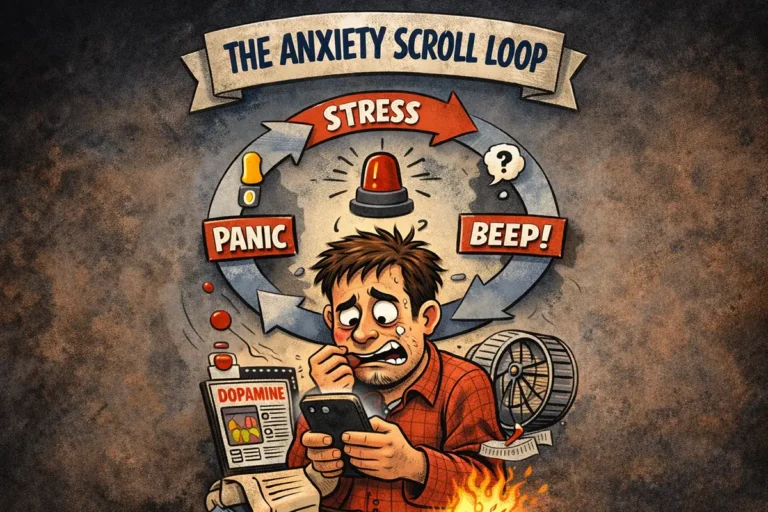
If you keep picking up your phone without meaning to, you’re not lacking discipline—you’re stuck in a loop. This post breaks down why compulsive checking happens and introduces a simple 3-part framework to interrupt it: recognize the trigger, insert one small pause, and add gentle friction to the environment. With practical scripts and a 24-hour experiment, you’ll have something concrete to try tonight—no shame, no detox required.
Doom scrolling doesn’t calm anxiety—it intensifies it. For ADHD brains, scrolling can become a regulation loop where fear sharpens focus and activation gets mistaken for relief. By the time you want to stop, executive function is already offline. This post explains why restriction alone fails and why the real solution is sequence: regulate your nervous system first, then redirect the behavior. It’s not a discipline problem—it’s a regulation one.
Most New Year resolutions fail because they rely on motivation instead of systems. If you’re tired of the all-or-nothing cycle, there’s a better way. Tiny “If-Then” rules—like plugging in your phone across the room or delaying checks until a set time—turn vague intentions into automatic habits. These micro-steps build confidence, reduce overwhelm, and help you create realistic New Year resolutions that actually last. Change happens when your rules get smaller, not when your goals get bigger.
January planning can feel especially heavy if you have ADHD—big goals spark a burst of motivation, then quickly collapse into overwhelm and shame. This post reframes New Year planning through an ADHD-friendly lens, explaining why traditional resolutions fail and how tiny starts, visual rules, and time anchoring create momentum without pressure. Instead of chasing a “new you,” you’ll learn how to design systems that support your brain, reduce friction, and make progress feel possible again.
Winter can leave ADHD brains feeling “tired but wired”—exhausted, restless, and pulled toward constant stimulation. This post explains why shorter days, less movement, and more screen exposure intensify ADHD restlessness, and why it’s a nervous system response, not a discipline issue. With simple, regulating swaps like micro-movement, sensory anchors, and gentler evening light, you’ll learn how to clear the winter fog without spiraling into digital overload or self-blame.
The first holiday after divorce doesn’t have to feel like a loss. In fact, mine turned out sweeter, calmer, and surprisingly joyful. By letting go of old expectations and creating simple new traditions with my kids, the season became ours again: cozy, meaningful, and enough. If you’re navigating this transition, you’re not alone. With a few gentle shifts, your holidays can feel lighter and more aligned with what truly matters. Let’s make them yours.