Blog

Welcome to the Offline.now Blog - your trusted resource for navigating digital detox and reclaiming balance.

Explore daily insights into managing phone stress, reducing screen time, curbing doomscrolling, and practical digital wellness strategies. Let our science-backed tips and expert advice empower you to build a healthy relationship with technology.
Phone use and sleep problems correlate at 0.38 across 63 studies (Okunlola, 2026). What helps with insomnia from night phone use, in order.
64% of adults 30 to 49 say they use their phone too much (Pew, 2026). Why interruptions cost more than hours, and the one window to protect first.
A 2026 meta-analysis of 63 studies found a 0.38 link between phone use and poor sleep. The step that holds: charge it outside the bedroom.
Updated October 2026. Of the 45% of U.S. adults who tried to cut back on their phone last year, one in four called it a clear success. The problem is the system around the habit, and two 2025-2026 trials show what changes it.
The Harvard Gazette asked this week whether quitting smartphones should be this hard. Eli Singer, creator of the Offline.now Matrix, says yes, because quitting is the wrong goal, and the Pew numbers show why.
Phubbing is snubbing someone for your phone. A 2026 review of 22 studies found feeling ignored does the harm. Protect one quiet moment a day.
Built-in limits, blockers, friction apps, physical locks, focus timers, trackers and a plan with no tool, compared on four questions the Offline.now Matrix supplies: does it change the environment, leave a skill, add a system, and have evidence.
ADHD can make follow-through harder, not because of a lack of motivation, but because executive function challenges affect task initiation, time perception, attention, and planning. Learn how simple ADHD-friendly tools, realistic systems, and practical strategies can make time more visible, reduce decision load, and help you follow through on everyday responsibilities.

Divorce after 50 can disrupt confidence, identity, routines, and plans for the future, but rebuilding is possible. This guide explores practical ways women can regain clarity and self-trust through small decisions, self-compassion, visible wins, and structured support.
ADHD can make workplace priorities, task initiation, and follow-through harder—even for highly capable professionals. This article explores how ADHD coaching can reduce friction, clarify priorities, and build practical systems for getting important work started and completed. It also covers brain-friendly strategies for managing competing demands, protecting focus, reducing interruptions, and creating consistent accountability.
Digital overwhelm can affect how we work, connect, and use our phones. From LinkedIn FOMO and relationship tension to digital detoxes that fall apart, lasting change starts with understanding your current habits and making small, sustainable adjustments to your environment.
Breaking a phone habit is not simply a matter of having more discipline. Stress, boredom, work demands, and exhausted decision-making can all reinforce compulsive phone use. Sustainable change starts with practical boundaries, smaller steps, and support that matches your situation. Learn how to build healthier phone habits, reduce doomscrolling, and create digital boundaries that actually last.
Offline.now has been named Canadian Ambassador for the Global Day of Unplugging, the international movement for healthier screen habits across 20+ countries. We're holding space open for Canadian practitioners, organizations, and community partners to come together year-round on digital wellness. Come help us build it.
You meant to check one thing on your phone. That was forty-five minutes ago. Join Offline.now and the University of Toronto for Screen Life, a free Toronto Tech Week workshop on Thursday, May 28. Take a personal assessment, hear from a curated group of expert practitioners, and leave with a plan that fits your real life.
The debate about smartphones and mental health swings between alarm and dismissal. Both miss the real finding. The research is consistent on one thing: the phone is not the variable that matters. The pattern of use is. Here is what that distinction actually means - and how to use it to think more clearly about your own habits.
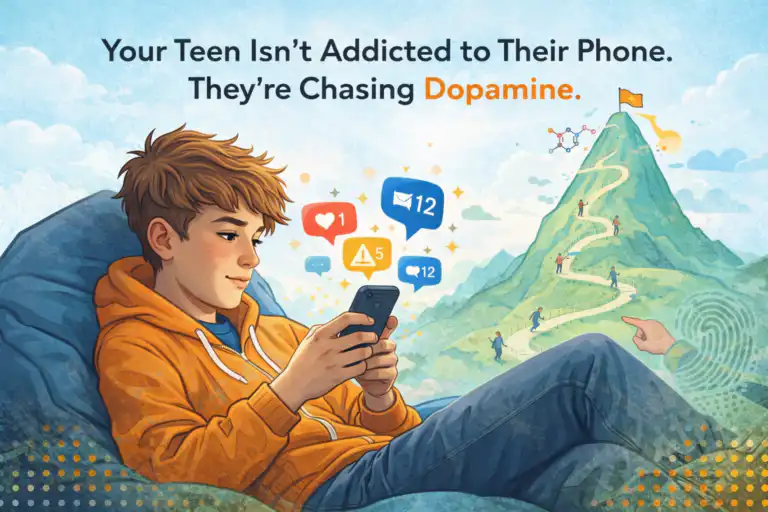
Your teen isn't weak, lazy, or addicted. They're responding exactly as their brain is wired to - and more often than not, what they're really feeling is overwhelmed. This piece explains the neuroscience behind teen phone use, why stress drives the behavior more than discipline ever will, and what parents can actually do about it.
There is a particular kind of tired that does not go away with sleep. If you end most days feeling flat, irritable, or hollowed out after hours of being digitally connected, that exhaustion is real, it has a cause, and it is not a personal weakness. Cleo Haber, MSW, RSW, explains the mechanism - and what your inner world is actually asking for.
You are not using your phone right now. But you are probably still thinking about it. That background alertness has a name, a mechanism, and a direct pathway to mental health decline - and it has nothing to do with how many hours you log on screen. Here is what the research actually shows about online vigilance, why stress is the real variable, and what that means for what you should try next.