Blog

Welcome to the Offline.now Blog - your trusted resource for navigating digital detox and reclaiming balance.

Explore daily insights into managing phone stress, reducing screen time, curbing doomscrolling, and practical digital wellness strategies. Let our science-backed tips and expert advice empower you to build a healthy relationship with technology.
Work stress and anxiety can affect your sleep, relationships, confidence, and everyday life. Online therapy offers flexible, accessible support for managing workplace pressure, burnout, and emotional distress. Learn how evidence-based online therapy can help you build healthier coping strategies and feel more supported.
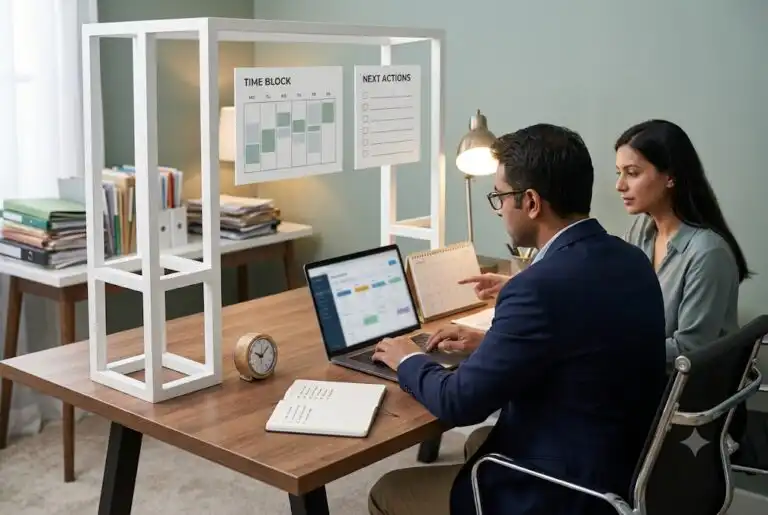
If you’re a professional with ADHD, you may have tried planning systems that seemed perfect on paper, only to watch them fall apart a few weeks later. The problem isn’t that you lack discipline or motivation. ADHD can make planning, task initiation, time management, and follow-through uniquely challenging. This guide explores why traditional planning systems often fail and how to build a more flexible approach that actually works with your brain.
Struggling with procrastination, time management, or follow-through does not mean you lack motivation or discipline. For many adults with ADHD, executive function challenges can make it difficult to start tasks, manage time, maintain momentum, and finish what matters. This article explores practical, brain-friendly strategies, including body doubling, accountability, coaching, and simple digital tools—to reduce friction and build systems that make consistent progress easier.

ADHD affects an estimated 6% of university students, and task initiation is one of the most common places it shows up. Assignments don't stall because students don't understand the material or don't care. They stall because starting is genuinely harder for an ADHD brain, and a phone is the most available, most immediate alternative in the room.
Adults with ADHD often feel like their phones are impossible to put down—but the problem isn’t a lack of willpower. ADHD brains are wired for interest, novelty, and dopamine, making modern apps especially difficult to resist. This article explains why digital overwhelm happens, how phones amplify executive function challenges, and the practical, science-informed strategies that can help you regain focus, reduce distraction, and build healthier screen habits without guilt or unrealistic rules.
For many people in the first stretch of their career, stress builds from several directions at once. Heavy workloads, tight deadlines, unclear expectations, difficult manager relationships, and the quiet pressure to always be available can all layer on top of each other. Hybrid and remote work can help in some ways, but they can also blur the line between work time and rest.
Midlife divorce carries its own weight. It arrives alongside the emotional reality of starting over at a stage of life many assumed would feel more settled. The shift after divorce is rarely instant, and it should not be sold that way. What women often need first is steadiness. Then comes clarity. Then confidence begins to return on its own terms.
If a pattern can be passed down, it can also be put down. Here's what healing generational trauma actually looks like — naming the pattern, calming the body, rewriting the story, setting boundaries, and grieving what you didn't get — and how to break the cycle without blaming your parents.
Inherited trauma rarely announces itself. It shows up in your body, your relationships, and your habits — wearing the costume of “that's just how I am.” Here's how generational trauma surfaces as hypervigilance, repeating relationship patterns, addiction, control, and people-pleasing, and why recognizing it is the turning point.
“What's your attachment style?” became a third-date question, but the dating-app version gets one thing backwards. Your attachment style isn't a fixed personality trait you were born with — it's a pattern you learned, and often one you inherited. Here's where it really comes from and how it can change.
As an ADHD coach, I see it constantly: attention in ADHD isn't broken, it's interest-based. Screens are simply efficient dopamine delivery, meeting a need that's already there. Here's a clearer way to understand hyperfocus, and how to work with your wiring instead of against it in a world built to capture it.
“Generational trauma” gets thrown around on TikTok for everything, but the real thing is far more useful than the watered-down version. Here's what intergenerational trauma actually is, how it passes between generations, the signs you might be carrying it, and why you can be the one it stops with.
The Offline.now Matrix may look simple, but it’s built on decades of research in self-efficacy, stages of change, and positive psychology. By mapping motivation and confidence, it meets you where you are without judgment and pairs you with science-backed micro-strategies for lasting change. From BJ Fogg’s tiny habits to emerging screen time studies, this framework turns proven theory into practical steps for digital balance. Start small, stay consistent, and discover your quadrant with our quick quiz.
Boredom isn’t wasted time, it’s your creativity engine. When you stop filling every lull with screens, the brain shifts into default mode daydreaming, where ideas collide and insights surface. This post reframes boredom as a healthy pause, unpacks the science of mind-wandering and creative incubation, and offers five micro-detox tactics from scheduled no-scroll moments to analog hobbies. Use your journal and turn idle minutes into spark sessions that revive focus and imagination every single day again.
The Single Room Rule is a behaviorally informed strategy to reduce phone dependency by designating a single space for device use. Grounded in habit science and digital wellness research, this method minimizes environmental triggers, boosts self-regulation, and encourages intentional tech use. Ideal for parents, professionals, and students alike, this practical approach helps you reclaim attention, improve sleep, and foster real-world connection without relying on willpower alone. A small boundary that yields measurable psychological benefits.
Phones hand out dopamine on demand, perfect for ADHD brains, but brutal for productivity. If “just five minutes” of scrolling morphs into an hour, try these four research-backed shifts. Swap self-blame for ADHD coaching that builds planning skills and self-compassion; lean on uncluttered digital tools and a no-login ChatBot for gentle nudges; reset with a quick walk to boost executive function; and stack tiny “micro-wins” like answering one text. Progress, not perfection, rewires phone habits and your day.
Is your phone packed with 20,000 photos you never scroll? That silent stress is digital hoarding—cloud clutter that drains focus and sparks guilt. This post rewrites decluttering as self-care: clarify your “why,” nail quick wins like duplicate deletion and screenshot sweeps, mute non-essential notifications, and schedule device-free zones to stop new piles forming. Progress, not perfection, is the rule. Finish by creating a bite-size declutter checklist and start curating memories that actually matter.
Ever yanked out your phone after a phantom buzz only to find silence? That eerie misfire is phantom vibration syndrome - your brain’s sensorimotor wiring glitching after constant notifications. This post unpacks how prediction-error loops and dopamine-driven checking habits create phantom phone sensations, then delivers five coach-style micro-wins: relocate the device, switch vibration patterns, run a body-scan reset, schedule no-buzz blocks, and try a weekly bag-carry challenge. Quiet the “ghost buzz” and reclaim calm focus.