Blog

Welcome to the Offline.now Blog - your trusted resource for navigating digital detox and reclaiming balance.

Explore daily insights into managing phone stress, reducing screen time, curbing doomscrolling, and practical digital wellness strategies. Let our science-backed tips and expert advice empower you to build a healthy relationship with technology.
Inherited trauma rarely announces itself. It shows up in your body, your relationships, and your habits — wearing the costume of “that's just how I am.” Here's how generational trauma surfaces as hypervigilance, repeating relationship patterns, addiction, control, and people-pleasing, and why recognizing it is the turning point.
“What's your attachment style?” became a third-date question, but the dating-app version gets one thing backwards. Your attachment style isn't a fixed personality trait you were born with — it's a pattern you learned, and often one you inherited. Here's where it really comes from and how it can change.
As an ADHD coach, I see it constantly: attention in ADHD isn't broken, it's interest-based. Screens are simply efficient dopamine delivery, meeting a need that's already there. Here's a clearer way to understand hyperfocus, and how to work with your wiring instead of against it in a world built to capture it.
“Generational trauma” gets thrown around on TikTok for everything, but the real thing is far more useful than the watered-down version. Here's what intergenerational trauma actually is, how it passes between generations, the signs you might be carrying it, and why you can be the one it stops with.
Offline.now has been named Canadian Ambassador for the Global Day of Unplugging, the international movement for healthier screen habits across 20+ countries. We're holding space open for Canadian practitioners, organizations, and community partners to come together year-round on digital wellness. Come help us build it.
You meant to check one thing on your phone. That was forty-five minutes ago. Join Offline.now and the University of Toronto for Screen Life, a free Toronto Tech Week workshop on Thursday, May 28. Take a personal assessment, hear from a curated group of expert practitioners, and leave with a plan that fits your real life.
The debate about smartphones and mental health swings between alarm and dismissal. Both miss the real finding. The research is consistent on one thing: the phone is not the variable that matters. The pattern of use is. Here is what that distinction actually means - and how to use it to think more clearly about your own habits.
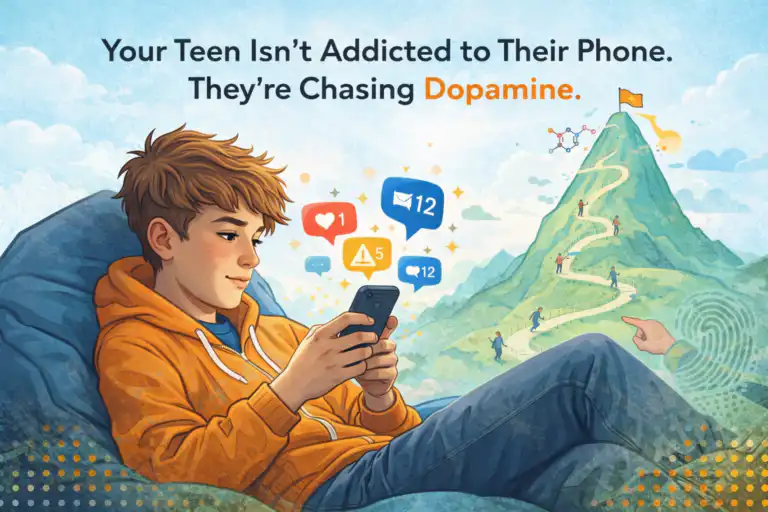
Your teen isn't weak, lazy, or addicted. They're responding exactly as their brain is wired to - and more often than not, what they're really feeling is overwhelmed. This piece explains the neuroscience behind teen phone use, why stress drives the behavior more than discipline ever will, and what parents can actually do about it.
There is a particular kind of tired that does not go away with sleep. If you end most days feeling flat, irritable, or hollowed out after hours of being digitally connected, that exhaustion is real, it has a cause, and it is not a personal weakness. Cleo Haber, MSW, RSW, explains the mechanism - and what your inner world is actually asking for.

You are not using your phone right now. But you are probably still thinking about it. That background alertness has a name, a mechanism, and a direct pathway to mental health decline - and it has nothing to do with how many hours you log on screen. Here is what the research actually shows about online vigilance, why stress is the real variable, and what that means for what you should try next.
Loneliness among young adults is rising - and the advice about what to do about it is heavy on app recommendations and light on evidence. A major systematic review offers a clearer picture: some digital approaches genuinely help, but the type and quality of interaction matters far more than the medium. Here is what the research actually shows.
Being available and being present are not the same thing. Most leaders know this abstractly. Far fewer have examined what constant digital availability is actually doing to their capacity for the second one. This is not a wellness argument. It is a leadership performance argument - and the evidence behind it is precise enough to be worth taking seriously.
Need screen-time balance but feel drained? Start with this five-step planner: enjoy one phone-free meal, swap the last five minutes of night scrolling for a book or breath, tackle boredom with a two-minute offline substitute, silence one non-essential app, and post a sticky note listing why balance matters. Micro wins build confidence, lower stress, and spark momentum. Pick one step for tomorrow and celebrate the lift in focus and daily calm.
Mindfulness exercises fit even the busiest calendar when they take five minutes or less. This toolkit delivers five micro practices: a one-minute breath reset, mindful scrolling check before feeds, two-minute body scan, single-breath transition between tasks, and quick gratitude text. Anchor each to an existing routine - coffee, email, meeting wrap - to avoid overload. Consistency compounds into calmer mood and sharper focus. Choose one exercise today, set a calendar ping, and start building resilience now.
Two weeks without mobile internet improved attention and well-being in a randomized trial. What a digital detox does, how long, and a 7-day plan.