Blog
Welcome to the Offline.now Blog - your trusted resource for navigating digital detox and reclaiming balance.
Explore daily insights into managing phone stress, reducing screen time, curbing doomscrolling, and practical digital wellness strategies. Let our science-backed tips and expert advice empower you to build a healthy relationship with technology.
53% of U.S. adults say they use their phone too much (Pew, 2026). No test diagnoses phone addiction. Two questions that tell you where to start.
Opal, one sec, Brick, Cold Turkey, ScreenZen and Forest compared on four criteria. In one trial a block cut screen time from 314 to 161 minutes.
43 studies link bedtime procrastination to shorter, worse sleep. Why the late hour feels earned, and the 20-minute step that moves it.
Adults spend 6 hours 38 minutes a day online (GWI). What counts as too much screen time in 2026, and the one setup change that beats a cap.
Batching notifications three times a day cut stress in a trial of 237 adults; turning them all off raised anxiety. The settings to change, in order.
Teens who used their phones more after 10 p.m. slept 20 minutes less (Zhao, 2026). The phone rules that hold name one place and one time.
ADHD symptoms and problematic social media use correlate at 0.36 across 15 studies (Ding, 2025). Why the phone pulls harder, and what helps.
Doomscrolling is linked to anxiety across 44 studies (Li and Yin, 2026). What the word means, what it does to you, and the setup change that holds.
Digital burnout has five sources, and 84 pooled studies show each has its own cause (Kotek, 2025). The signs, the loop, and the first step back.
A 30-minute phone-free buffer cut time to fall asleep in a four-week trial (He, 2020). The 15-minute evening reset: three steps, phone first.
Phone use and sleep problems correlate at 0.38 across 63 studies (Okunlola, 2026). What helps with insomnia from night phone use, in order.
64% of adults 30 to 49 say they use their phone too much (Pew, 2026). Why interruptions cost more than hours, and the one window to protect first.
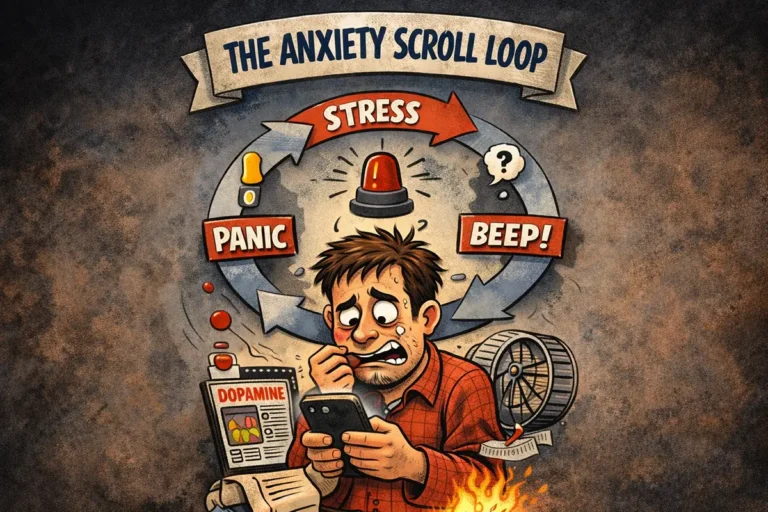
Doom scrolling doesn’t calm anxiety—it intensifies it. For ADHD brains, scrolling can become a regulation loop where fear sharpens focus and activation gets mistaken for relief. By the time you want to stop, executive function is already offline. This post explains why restriction alone fails and why the real solution is sequence: regulate your nervous system first, then redirect the behavior. It’s not a discipline problem—it’s a regulation one.
Feeling replaced by a screen can cut deeper than distraction—it can touch on desirability, safety, and emotional access. This post explores when screens genuinely erode intimacy and when they function as a coping strategy for stress, resentment, or vulnerability. Instead of focusing only on tech rules, it examines the emotional context beneath disconnection and why rebuilding safety often matters more than banning phones from the bedroom.
When screens enter a relationship, the issue isn’t usually the device itself—it’s what it amplifies. This post explores how different attachment styles respond to stress, why one partner’s scrolling can feel like rejection to another, and how emotional availability erodes quietly over time. Instead of blame or shame, it invites curiosity about what’s happening beneath the surface, reminding us that screens don’t break connection—they expose where it already feels fragile.
We often talk about screen time affecting mood and focus—but emerging research suggests it may also impact chronic inflammation. A University at Buffalo study found higher social media use predicted increased CRP, a key inflammation marker. Blending research with personal experience, this post explores how stress activation, poor sleep, and sedentary scrolling may affect the body—and shares practical, realistic steps to reduce digital stress and support long-term health.
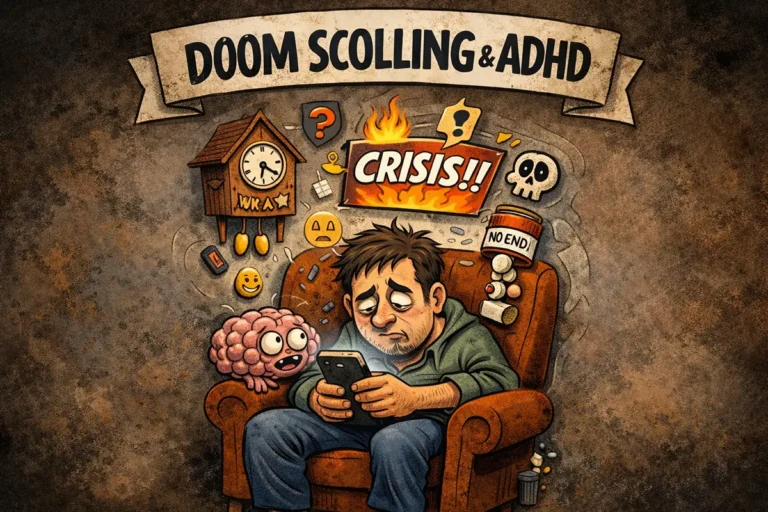
If you have ADHD, doom scrolling isn’t about laziness or poor discipline—it’s what happens when a novelty-seeking brain meets infinite scroll and threat-based content. This post breaks down why ADHD brains are especially vulnerable to doom scrolling, how anxiety can hijack attention, and why shame doesn’t work. Instead of “scroll less” advice, you’ll learn how to change the environment, add real stopping cues, and give your brain somewhere safe to land.
Are Snapchat and TikTok actually dangerous for teens? The real risk isn’t the apps themselves—it’s how they blur privacy, permanence, and performance in ways adolescent brains aren’t equipped to manage. Drawing on clinical work and lived parenting experience, this post explains how online harm often unfolds, why shame makes safety worse, and how families can use practical, non-judgmental tools to help teens protect their agency, make safer choices, and ask for help before mistakes become permanent.