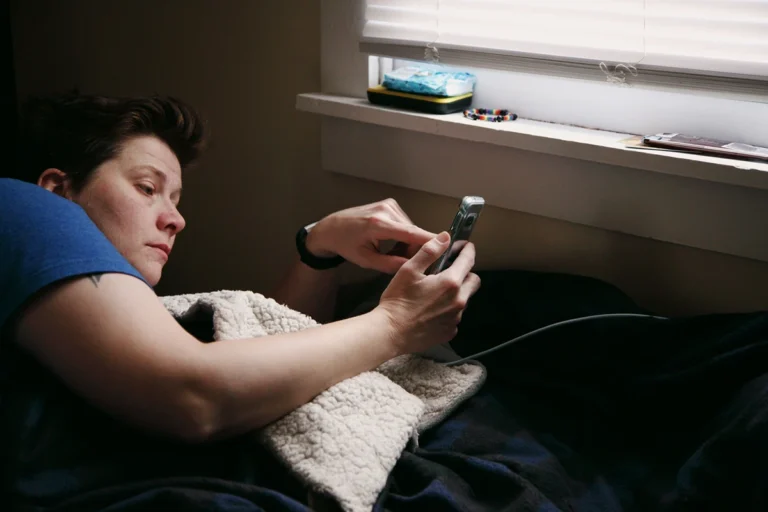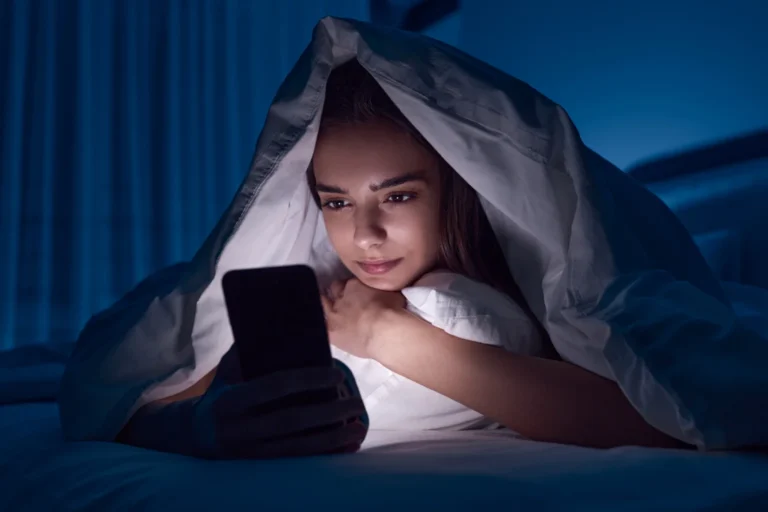
The house goes quiet at 10:30. You meant to be asleep by 11, and at 12:40 you are still scrolling, because this is the only hour of the day that is yours. Revenge bedtime procrastination is the popular name for that trade, and the way out is to move the hour, since giving it up is the plan that has already failed. Pooling 43 studies, Hill and colleagues (2022) found that people who put off bedtime slept less and worse, with a moderate link to daytime fatigue. The Offline.now Matrix is a self-reflection framework that maps your motivation to change your phone habits against your confidence that you can, and sorts the result into four types, each with its own starting place. The type that fits this pattern is usually Overwhelmed: Overwhelmed means high motivation and low confidence, so you genuinely want to change, and what you’ve tried hasn’t stuck. Lasting change runs on confidence, not willpower.
Offline.now is a directory of therapists and coaches who work on screen and phone use, and the home of the Offline.now Matrix, a two-question self-reflection framework that finds your starting place.
What is revenge bedtime procrastination?
It is a popular term for what researchers call bedtime procrastination: going to bed later than you intended when nothing outside you is stopping you. Kroese and colleagues (2014) introduced the construct in a survey of 177 adults. People lower in self-regulation delayed bedtime more, and the delay was linked to insufficient sleep after accounting for self-regulation and demographics.
The “revenge” part spread on social media around 2020, translated from a Chinese expression. It names the motive: the day took everything, so the night is where you take something back. The research term leaves the motive out, and the motive tells you what the late hour is for.
Why do you do it even when you are exhausted?
Because the hour is real and the need behind it is legitimate. If your day runs from the first alarm to the last lunchbox with no gap that is yours, bedtime is the first moment nobody needs anything from you. Staying up is a reasonable response to that day, and the phone fits the moment because it is already in your hand.
Self-regulation also runs low at that hour. In a representative sample of 2,431 Dutch adults, Kroese and colleagues (2016) found that lower self-regulation was associated with more insufficient sleep, and that bedtime procrastination explained the link. The tired version of you is deciding, and she has the least capacity to close the app. The phone then works on the clock. Exelmans and Van den Bulck (2017) proposed that media displaces sleep in two steps: it pushes bedtime later, then it stretches the gap between getting into bed and trying to sleep.
What does the research say it costs?
Less sleep and worse sleep, with a more tired day after, and the link is moderate and consistent. Hill, Rebar, Ferguson, Shriane and Vincent (2022) reviewed 43 studies of bedtime procrastination for Sleep Medicine Reviews. The pooled association with sleep duration was about 0.31 in the negative direction, with sleep quality about 0.35 in the negative direction, and with daytime fatigue about 0.32.
The wider phone and sleep picture points the same way. Pooling 63 studies of 18 to 25 year olds, Okunlola and colleagues (2026) found a correlation of 0.38 between problematic smartphone use and poor sleep quality. Among U.S. adults aged 30 to 49, 52 percent say their phone hurts their sleep, against 41 percent of all adults, according to the Pew Research Center (2026). More is collected in the Offline.now phone habits statistics.
What does the research not show?
It does not show that the late hour causes the poor sleep, and the authors say so. Hill and colleagues rated the certainty of the evidence as low, because the studies were almost all cross-sectional and self-reported, and a person under heavy stress may both delay bedtime and sleep badly for reasons a survey cannot separate. The Pew figure is a perception, and the Okunlola sample was young adults. None of this changes the direction of the advice. It changes how much any one night can be blamed on the phone.
What does that mean for your week?
Lasting change runs on confidence, not willpower: start where you actually are, with a step small enough to win. For this pattern the step is to move the hour, since the hour is the point. Protect 20 minutes earlier in the evening that are yours, phone optional, so bedtime stops being the only window. For an Overwhelmed type the size matters more than the design: 20 minutes is small enough to find on a weeknight and large enough to feel like something.
| What happens at night | Why it happens | A better adjustment |
|---|---|---|
| You stay up because the day left no time for you | The need for unclaimed time is real | Protect 20 minutes earlier in the evening |
| “Ten more minutes” becomes an hour in bed | Media displaces sleep in two steps | Set the bedtime before the window opens; charge the phone outside the bedroom |
| You cut the phone entirely and it is back in a week | Big resets rebound | Keep the hour, change its timing, let the phone be optional inside it |
| Screen time limits did not hold | Limits ask the tired version of you to say no | Write an if-then plan while you are rested |
Write the plan in advance. Gollwitzer and Sheeran (2006) pooled 94 studies of implementation intentions, the if-then form of planning, and found an effect on goal attainment of d = 0.65. A version for this: “If the kitchen is done and it is before 9, then I take my 20 minutes on the couch before anything else.”
Expect the pull to return. In a preregistered randomized trial of 467 adults, Castelo and colleagues (2025) blocked mobile internet for two weeks. Daily screen time fell from 314 minutes to 161 during the block and was back to 265 within two weeks of it ending. A moved hour has less to rebound from, because the need it serves is still being met. For why the phone holds you in bed once you are there, see why it is so hard to stop checking your phone at night. If the hour has moved and sleep still will not come, read what helps with insomnia from night phone use.
Is there a more honest way to think about it?
The late hour is evidence that your day has no gaps, and the scrolling is evidence that the phone is the easiest way to fill the one gap that exists. Neither is a character flaw. The attempts that did not stick asked you to give up the hour. The step above asks you to keep it.
If you want a different way to change your screen habits, one with no shame and no judgment, Offline.now was built for you.
Start with the two questions at offline.now/start. They take about a minute and sort you into one of four types, each with its own starting place. The Find Your Starting Place worksheet does the same thing on paper: one page, free to download, no email required. After the quiz, the Offline.now Program is the next step. Use it on the web and by email, with no download. There is no streak to lose and no password to remember.
If the lost sleep is shaping your days, or the late hour is covering a worry that does not lift by morning, a conversation with a qualified practitioner helps. The Offline.now directory lists therapists and coaches who work on tech-induced insomnia. For the daytime side of the same pull, see what actually works for phone addiction when nothing else has.
Frequently asked questions
Is revenge bedtime procrastination a real thing?
Yes, under a different name. Researchers call it bedtime procrastination, and a 2022 meta-analysis of 43 studies found moderate links to shorter sleep, worse sleep quality and daytime fatigue. The “revenge” framing is a popular term that spread online and describes the motive.
Why do I do it even when I am exhausted?
Because bedtime is often the first moment of the day that is yours, and the tired version of you decides whether to end it. A 2016 study of 2,431 adults found that lower self-regulation was associated with less sleep through this kind of delay. Exhaustion makes the delay more likely and the need behind it no less real.
How do I stop doomscrolling before bed when screen time limits have not worked?
Move the time you are protecting, since a limit only asks you to give it up. Protect 20 minutes earlier in the evening, set your bedtime before that window opens, and write the plan as an if-then sentence while you are rested. A limit at 11 p.m. asks the most tired version of you to enforce it.
Where do I start?
Start with the two questions at offline.now/start, which take about a minute. The result is one of four types, and most people who stay up for the hour that is theirs land on Overwhelmed, which has its own starting place. The Find Your Starting Place worksheet does the same thing on paper, free, with no email required.
Offline.now provides coaching-oriented guidance, not diagnosis or medical advice. If digital habits are creating significant distress, working with a qualified practitioner is a strong next step. The Offline.now expert directory is a good place to start.
Curious about the data?
Hill, V. M., Rebar, A. L., Ferguson, S. A., Shriane, A. E., and Vincent, G. E. (2022). Go to bed! A systematic review and meta-analysis of bedtime procrastination correlates and sleep outcomes. Sleep Medicine Reviews, 66, 101697. https://doi.org/10.1016/j.smrv.2022.101697
Kroese, F. M., De Ridder, D. T. D., Evers, C., and Adriaanse, M. A. (2014). Bedtime procrastination: introducing a new area of procrastination. Frontiers in Psychology, 5, 611. https://doi.org/10.3389/fpsyg.2014.00611
Kroese, F. M., Evers, C., Adriaanse, M. A., and De Ridder, D. T. D. (2016). Bedtime procrastination: A self-regulation perspective on sleep insufficiency in the general population. Journal of Health Psychology, 21(5), 853-862. https://doi.org/10.1177/1359105314540014
Exelmans, L., and Van den Bulck, J. (2017). Bedtime, shuteye time and electronic media: sleep displacement is a two-step process. Journal of Sleep Research, 26(3), 364-370. https://doi.org/10.1111/jsr.12510
Okunlola, T. T., Lenka, A. K., Singh, M., Awasthi, S., Sharma, S., and Chanchal, R. (2026). Smartphone addiction and sleep disruption among young adults (18-25 years): a systematic review and meta-analysis. International Journal of Adolescent Medicine and Health, 38(4), 327-359. https://doi.org/10.1515/ijamh-2025-0168
Pew Research Center (2026). About half of Americans say they spend too much time on their smartphone. Bishop, W., Sidoti, O., and Anderson, M. pewresearch.org
Gollwitzer, P. M., and Sheeran, P. (2006). Implementation intentions and goal achievement: A meta-analysis of effects and processes. Advances in Experimental Social Psychology, 38, 69-119. https://doi.org/10.1016/S0065-2601(06)38002-1
Castelo, N., Kushlev, K., Ward, A. F., Esterman, M., and Reiner, P. B. (2025). Blocking mobile internet on smartphones improves sustained attention, mental health, and subjective well-being. PNAS Nexus, 4(2), pgaf017. https://doi.org/10.1093/pnasnexus/pgaf017