Blog

Welcome to the Offline.now Blog - your trusted resource for navigating digital detox and reclaiming balance.

Explore daily insights into managing phone stress, reducing screen time, curbing doomscrolling, and practical digital wellness strategies. Let our science-backed tips and expert advice empower you to build a healthy relationship with technology.
You know how to handle hard things. But somewhere along the way, the part of you that learned to stay ready stopped being something you switch on when you need it and became the default. You are alert when you do not need to be. You cannot fully rest. You have been told to relax and genuinely cannot get there. This is not a character flaw. It is a nervous system that learned to do its job extremely well - and has not yet received the signal that the conditions have changed.
Most advice about digital well-being focuses on one thing: use your phone less. But a growing body of research suggests that raw time reduction is the wrong target. What actually matters is self-regulation, social quality, and intentional planning - and understanding that difference changes what you should try next.
Many arguments about phones in relationships go in circles: one partner feels ignored, the other feels criticized, and nothing really changes. The Later List is a simple shared ritual that helps interrupt that cycle. Instead of confronting the issue mid-scroll, couples jot concerns down and revisit them later when both people are calmer. This small structure reduces defensiveness, lowers conflict, and creates space for more honest conversations about connection and attention.
If you keep picking up your phone without meaning to, you’re not lacking discipline—you’re stuck in a loop. This post breaks down why compulsive checking happens and introduces a simple 3-part framework to interrupt it: recognize the trigger, insert one small pause, and add gentle friction to the environment. With practical scripts and a 24-hour experiment, you’ll have something concrete to try tonight—no shame, no detox required.
If you keep switching between email, Slack, and social media yet feel like nothing gets done, you may be experiencing task-switching debt. For ADHD brains, every unfinished task creates cognitive tension that quietly pulls attention back again and again. This post explains how switching debt builds throughout the day and shares simple micro-experiments to reduce open loops, lower mental fatigue, and make it easier to return to the work that actually matters.
When your phone is your business, “just put it away” isn’t realistic. But constant access can quietly destroy focus—especially for ADHD brains wired for novelty. In this personal reflection, an ADHD coach shares how late-night and early-morning doom scrolling was hijacking his attention and nervous system, and how one surprisingly simple change—a smart watch alarm—created friction that protected his focus without disconnecting him from work.
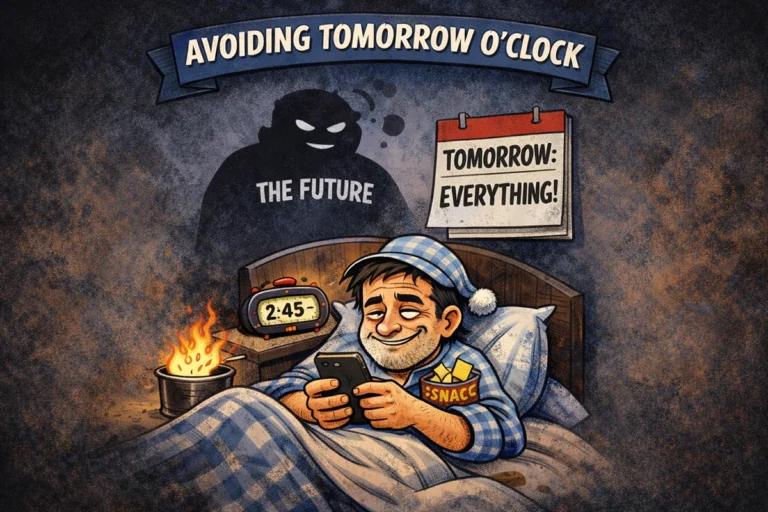
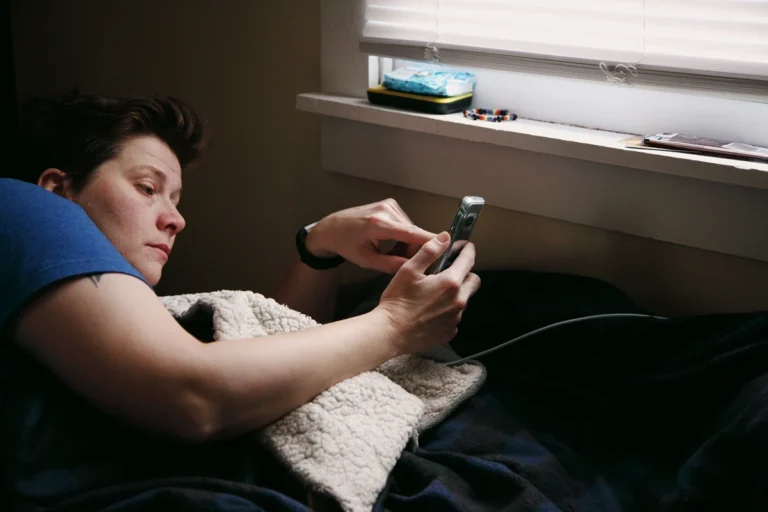
Late-night doom scrolling isn’t really about the phone—it’s about exhaustion, unfinished tasks, and an ADHD brain searching for relief. When the day feels overwhelming and nothing feels complete, endless scrolling offers easy stimulation without expectations. This post explores why burnout and ADHD make nighttime scrolling so common, and how small daytime shifts—like visible task completion and planned endings—can help your brain finally power down instead of staying stuck in the scroll.
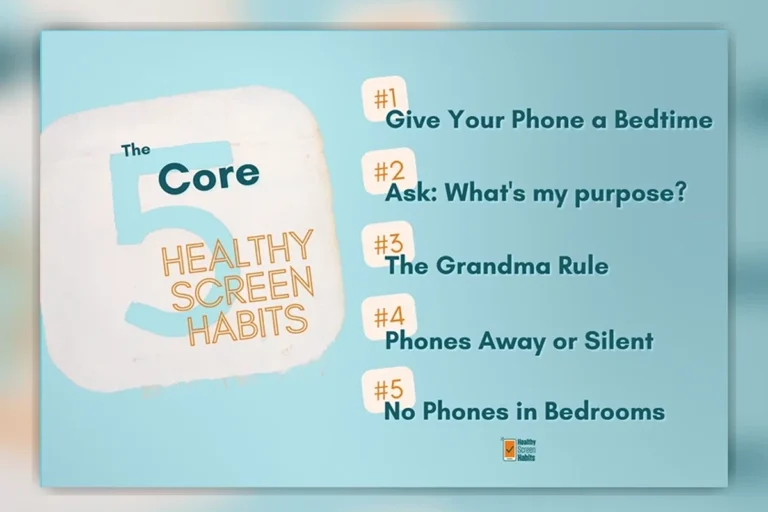
Healthy Screen Habits is helping families rethink screen time with simple, practical habits that prioritize connection over control. Instead of rigid rules or panic, their approach focuses on small, repeatable changes that make technology easier to manage in everyday life. In this post, we highlight their 5 Core Healthy Screen Habits and share a simple 7-day family experiment—small steps that can reduce digital overwhelm and help screens take up less space at home.
If your brain won’t shut up and scrolling leaves you more exhausted, you may be in ADHD burnout. This post explains why ADHD brains burn out differently, how screen time creates a false sense of relief, and why willpower isn’t the solution. With practical, brain-aligned strategies for protecting energy, setting boundaries, and prioritizing real rest, you’ll learn how to recover without forcing yourself to “try harder.”
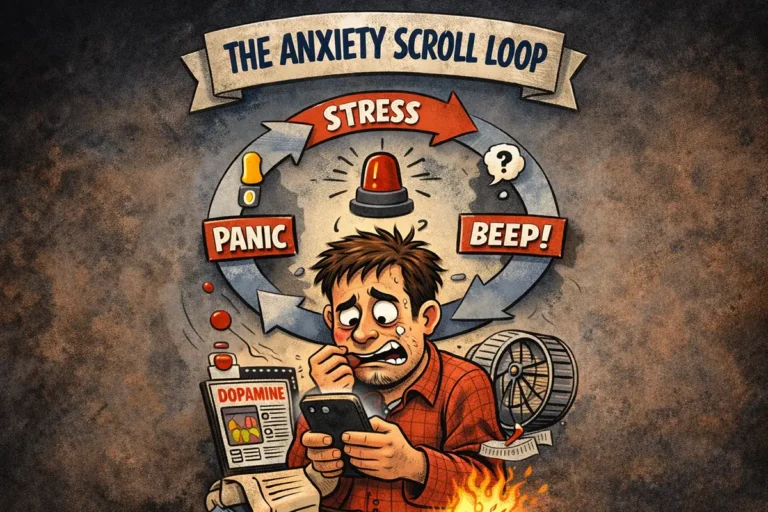
Doom scrolling doesn’t calm anxiety—it intensifies it. For ADHD brains, scrolling can become a regulation loop where fear sharpens focus and activation gets mistaken for relief. By the time you want to stop, executive function is already offline. This post explains why restriction alone fails and why the real solution is sequence: regulate your nervous system first, then redirect the behavior. It’s not a discipline problem—it’s a regulation one.
Feeling replaced by a screen can cut deeper than distraction—it can touch on desirability, safety, and emotional access. This post explores when screens genuinely erode intimacy and when they function as a coping strategy for stress, resentment, or vulnerability. Instead of focusing only on tech rules, it examines the emotional context beneath disconnection and why rebuilding safety often matters more than banning phones from the bedroom.
When screens enter a relationship, the issue isn’t usually the device itself—it’s what it amplifies. This post explores how different attachment styles respond to stress, why one partner’s scrolling can feel like rejection to another, and how emotional availability erodes quietly over time. Instead of blame or shame, it invites curiosity about what’s happening beneath the surface, reminding us that screens don’t break connection—they expose where it already feels fragile.
Screens now soak up more than six and a half hours of our daily lives over seven for Americans and nearly nine for Gen Z. Our 2025 screen time report unpacks the fresh numbers, from smartphone saturation to the rise of “doomscroll fatigue,” and translates data into action. Learn how constant connection strains attention, sleep, and mood and test three mini-detox tactics, from app timers to “analog power hours,” to reclaim calm, clarity, and healthier digital habits.
Ever yanked out your phone after a phantom buzz only to find silence? That eerie misfire is phantom vibration syndrome - your brain’s sensorimotor wiring glitching after constant notifications. This post unpacks how prediction-error loops and dopamine-driven checking habits create phantom phone sensations, then delivers five coach-style micro-wins: relocate the device, switch vibration patterns, run a body-scan reset, schedule no-buzz blocks, and try a weekly bag-carry challenge. Quiet the “ghost buzz” and reclaim calm focus.
A digital-free vacation rewires how you travel. Swapping smartphones for simple paper maps and face-to-face chats lowers cortisol, lifts mood, and lets your senses register every sea breeze and street melody. This guide walks you through setting clear tech boundaries, choosing unplugged destinations, and packing analog backups like film cameras and guidebooks. With screen-free travel tips for families and solo adventurers alike, you’ll return home rested, re-connected, and rich with real memories worth sharing offline.
Still sleep with your phone in the room? That glowing rectangle floods your brain with blue light, suppresses melatonin, and tempts night-owls into 2 a.m. doomscrolls. Research says simply parking the device eight feet away can restore circadian rhythms, reduce anxiety, and deepen REM sleep. Our quick guide unpacks the science, shares stylish bedside-free alarm options, and offers micro-wins like a 30-minute pre-bed swap to help you wake clearer, calmer, and ready for real-world focus every day.
Mindless thumb-flicking and endless bad-news binges aren’t the same digital trap. Zombie scrolling is that detached, trance-like drift through random feeds, slowly draining attention. Doomscrolling is a negativity loop, chasing alarming headlines that spike anxiety. Our post unpacks the science behind both habits, shows why motivation and confidence matter, and offers quadrant-specific micro-wins - from timer tricks to values resets - to help night owl professionals reclaim focus, mood, and sustained energy daily without deleting your favorite social apps entirely.
Autoplay’s countdown makes “just one more” the default. To limit binge watching without losing the fun, pre-decide an episode cap, disable autoplay, and pair the end of each session with an offline reward (tea, journaling, stretch). Stand up at every credit roll and ask, “Am I still watching by choice?” Host short watch-parties for social benefit, and keep the day’s first/last 30 minutes screen-free. These tiny, evidence-backed tweaks transform marathon nights into mindful, guilt-free streaming.