Blog

Welcome to the Offline.now Blog - your trusted resource for navigating digital detox and reclaiming balance.

Explore daily insights into managing phone stress, reducing screen time, curbing doomscrolling, and practical digital wellness strategies. Let our science-backed tips and expert advice empower you to build a healthy relationship with technology.
Winter can leave ADHD brains feeling “tired but wired”—exhausted, restless, and pulled toward constant stimulation. This post explains why shorter days, less movement, and more screen exposure intensify ADHD restlessness, and why it’s a nervous system response, not a discipline issue. With simple, regulating swaps like micro-movement, sensory anchors, and gentler evening light, you’ll learn how to clear the winter fog without spiraling into digital overload or self-blame.

Digital burnout isn’t just mental, it lives in the body. Drawing on kinesiology, this post reveals the physical and nervous system patterns behind compulsive screen use, from chronic fight-or-flight to energy depletion. It explains why willpower-based tech boundaries often fail and introduces the BAMBOO Method, a somatic approach to building flexible, sustainable resilience especially for neurodivergent, high-performing leaders navigating constant digital demand.
It can happen without conflict or intention: two people together, quietly pulled into separate screens. This post explores how phones can subtly interfere with connection in relationships, why it’s not about blame or addiction, and how patterns like partner phubbing affect emotional closeness. With gentle, realistic micro-swaps—no bans or ultimatums—you’ll learn how to restore presence, reduce resentment, and reconnect in small moments that actually fit real life.
If you have ADHD, procrastination isn’t a character flaw—it’s a nervous system response. This post breaks down why starting tasks can feel impossible, how emotion regulation and executive function play a role, and why willpower often fails. With practical, brain-friendly strategies like tiny starts and dopamine bridges, you’ll learn how to move from stuck to starting without shame. You don’t need more discipline. You need safer, kinder ways to begin.
Winter’s long, dark evenings can quietly pull us into hours of scrolling that leave us more tired, not less. This post explores why winter screen time hits differently, how dopamine, blue light, and sleep disruption play a role, and why it’s not a willpower issue. Most importantly, it offers gentle, realistic swaps no rigid rules that help you restore energy, improve mood, and find comfort that truly replenishes you during the colder months.
The first holiday after divorce doesn’t have to feel like a loss. In fact, mine turned out sweeter, calmer, and surprisingly joyful. By letting go of old expectations and creating simple new traditions with my kids, the season became ours again: cozy, meaningful, and enough. If you’re navigating this transition, you’re not alone. With a few gentle shifts, your holidays can feel lighter and more aligned with what truly matters. Let’s make them yours.
You may already be doing digital wellness work—ADHD and TikTok, couples fighting about phones, teens gaming late, burnout from constant notifications. Offline.now helps you turn these everyday client themes into a clear, searchable specialty. Join the first directory dedicated to tech-related mental health so clients can find you for the issues they’re already struggling with. Expand your visibility, articulate your niche, and connect with people who truly need your expertise.
If your evenings keep disappearing into binge-scrolling, streaming, or “just one more episode,” these three simple shifts can help you reclaim real downtime. From using app-based limits, to setting built-in screen boundaries, to filling the digital void with hobbies that genuinely energize you, this guide offers practical changes that actually stick. With bonus tips for navigating kids’ screen habits and emotional transitions, it’s a compassionate roadmap to calmer nights—and a life that finally feels like yours again.
If you’ve tried every digital wellness strategy and still feel restless, anxious, or unable to unplug, the problem isn’t your willpower—it’s your nervous system. In this powerful guest post, resilience coach Amanda Campbell shares how her recovery from paralysis revealed a deeper truth: your body must feel safe before it can disconnect. Through her BAMBOO Method and years of coaching burned-out leaders, she explains why strategies don’t stick and how real resilience begins in the body, not the mind.
Screen-related stress is now one of the top reasons people search for therapists and coaches from doomscrolling spirals to ADHD distraction, digital burnout, online anxiety, and family screen conflict. Offline.now is the first directory built entirely around technology-related mental and emotional health, helping clients find specialists who understand their digital struggles. Join the directory to get discovered by high-intent clients looking for exactly what you do and grow your practice in the fastest-rising specialty in mental health.
I once believed my colour-coded calendar proved I had elite time-management skills until divorce, job loss, and a global shutdown handed me empty evenings I didn’t know how to fill. With no distractions left, I realized I wasn’t managing time; I was stuffing it to avoid asking harder questions. As screen time crept in to replace the chaos, I had to face what I was really chasing and what I actually wanted from my newly reclaimed hours.
Screens slipped quietly into the middle of our families, meals and marriages and now it’s hard to remember what being together felt like before the scroll. This guide is your starting point for rethinking phones, parenting and partnership without going full “no screens ever” mode. You’ll explore boundaries for kids and teens, desire and dating in the app era, and simple family rituals that make real connection feel possible again, even when life feels unbearably busy.
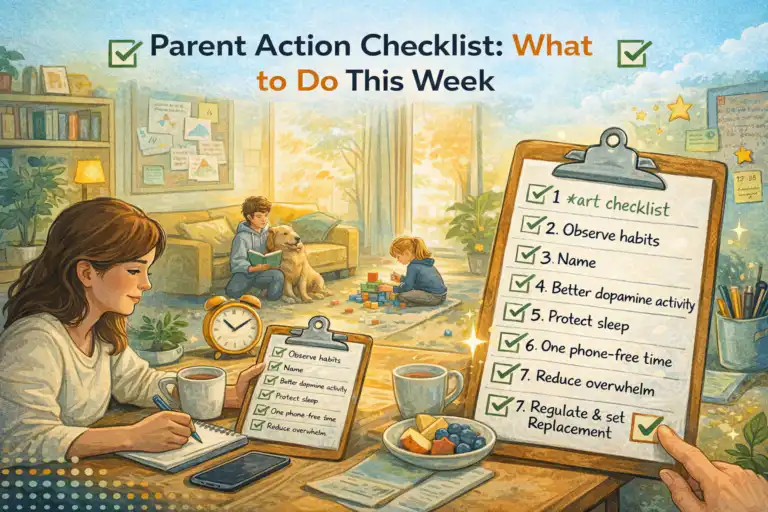
You don't need to overhaul everything at once. This practical checklist gives parents eight small, consistent actions to take this week - from observing patterns before intervening, to protecting sleep, to co-regulating before setting limits. Start small. Stay steady.
Most debate about gaming addiction swings between alarm and dismissal. The research offers something more useful: a precise clinical distinction between heavy use and addictive use, measurable markers that tell them apart, and honest prevalence data that sizes the risk accurately. Here is what the evidence actually shows.
You deleted the app. You set the limit. You tried the detox. And within days or weeks, the same pattern returned. If you have been treating that return as a personal failing, there is a more accurate explanation. Habits that feel compulsive persist because they are serving a function - managing stress, regulating emotion, filling a relational gap. Changing the behavior without understanding the function is why the pattern keeps coming back.
You know how to handle hard things. But somewhere along the way, the part of you that learned to stay ready stopped being something you switch on when you need it and became the default. You are alert when you do not need to be. You cannot fully rest. You have been told to relax and genuinely cannot get there. This is not a character flaw. It is a nervous system that learned to do its job extremely well - and has not yet received the signal that the conditions have changed.
Most advice about digital well-being focuses on one thing: use your phone less. But a growing body of research suggests that raw time reduction is the wrong target. What actually matters is self-regulation, social quality, and intentional planning - and understanding that difference changes what you should try next.
Many arguments about phones in relationships go in circles: one partner feels ignored, the other feels criticized, and nothing really changes. The Later List is a simple shared ritual that helps interrupt that cycle. Instead of confronting the issue mid-scroll, couples jot concerns down and revisit them later when both people are calmer. This small structure reduces defensiveness, lowers conflict, and creates space for more honest conversations about connection and attention.