Blog
Welcome to the Offline.now Blog - your trusted resource for navigating digital detox and reclaiming balance.
Explore daily insights into managing phone stress, reducing screen time, curbing doomscrolling, and practical digital wellness strategies. Let our science-backed tips and expert advice empower you to build a healthy relationship with technology.
Midlife divorce carries its own weight. It arrives alongside the emotional reality of starting over at a stage of life many assumed would feel more settled. The shift after divorce is rarely instant, and it should not be sold that way. What women often need first is steadiness. Then comes clarity. Then confidence begins to return on its own terms.
If a pattern can be passed down, it can also be put down. Here's what healing generational trauma actually looks like — naming the pattern, calming the body, rewriting the story, setting boundaries, and grieving what you didn't get — and how to break the cycle without blaming your parents.
Inherited trauma rarely announces itself. It shows up in your body, your relationships, and your habits — wearing the costume of “that's just how I am.” Here's how generational trauma surfaces as hypervigilance, repeating relationship patterns, addiction, control, and people-pleasing, and why recognizing it is the turning point.
“What's your attachment style?” became a third-date question, but the dating-app version gets one thing backwards. Your attachment style isn't a fixed personality trait you were born with — it's a pattern you learned, and often one you inherited. Here's where it really comes from and how it can change.
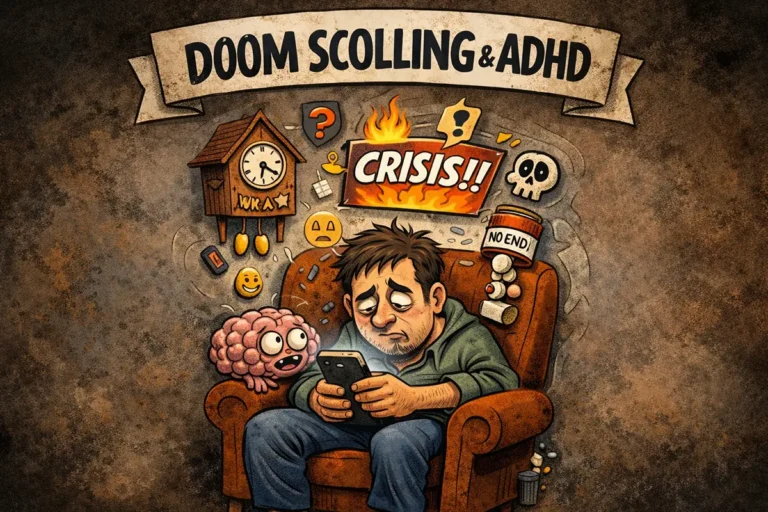
As an ADHD coach, I see it constantly: attention in ADHD isn't broken, it's interest-based. Screens are simply efficient dopamine delivery, meeting a need that's already there. Here's a clearer way to understand hyperfocus, and how to work with your wiring instead of against it in a world built to capture it.
“Generational trauma” gets thrown around on TikTok for everything, but the real thing is far more useful than the watered-down version. Here's what intergenerational trauma actually is, how it passes between generations, the signs you might be carrying it, and why you can be the one it stops with.
Offline.now has been named Canadian Ambassador for the Global Day of Unplugging, the international movement for healthier screen habits across 20+ countries. We're holding space open for Canadian practitioners, organizations, and community partners to come together year-round on digital wellness. Come help us build it.
You meant to check one thing on your phone. That was forty-five minutes ago. Join Offline.now and the University of Toronto for Screen Life, a free Toronto Tech Week workshop on Thursday, May 28. Take a personal assessment, hear from a curated group of expert practitioners, and leave with a plan that fits your real life.
The debate about smartphones and mental health swings between alarm and dismissal. Both miss the real finding. The research is consistent on one thing: the phone is not the variable that matters. The pattern of use is. Here is what that distinction actually means - and how to use it to think more clearly about your own habits.
Your teen isn't weak, lazy, or addicted. They're responding exactly as their brain is wired to - and more often than not, what they're really feeling is overwhelmed. This piece explains the neuroscience behind teen phone use, why stress drives the behavior more than discipline ever will, and what parents can actually do about it.
There is a particular kind of tired that does not go away with sleep. If you end most days feeling flat, irritable, or hollowed out after hours of being digitally connected, that exhaustion is real, it has a cause, and it is not a personal weakness. Cleo Haber, MSW, RSW, explains the mechanism - and what your inner world is actually asking for.
You are not using your phone right now. But you are probably still thinking about it. That background alertness has a name, a mechanism, and a direct pathway to mental health decline - and it has nothing to do with how many hours you log on screen. Here is what the research actually shows about online vigilance, why stress is the real variable, and what that means for what you should try next.
If you have ADHD, procrastination isn’t a character flaw—it’s a nervous system response. This post breaks down why starting tasks can feel impossible, how emotion regulation and executive function play a role, and why willpower often fails. With practical, brain-friendly strategies like tiny starts and dopamine bridges, you’ll learn how to move from stuck to starting without shame. You don’t need more discipline. You need safer, kinder ways to begin.
Winter’s long, dark evenings can quietly pull us into hours of scrolling that leave us more tired, not less. This post explores why winter screen time hits differently, how dopamine, blue light, and sleep disruption play a role, and why it’s not a willpower issue. Most importantly, it offers gentle, realistic swaps no rigid rules that help you restore energy, improve mood, and find comfort that truly replenishes you during the colder months.
The first holiday after divorce doesn’t have to feel like a loss. In fact, mine turned out sweeter, calmer, and surprisingly joyful. By letting go of old expectations and creating simple new traditions with my kids, the season became ours again: cozy, meaningful, and enough. If you’re navigating this transition, you’re not alone. With a few gentle shifts, your holidays can feel lighter and more aligned with what truly matters. Let’s make them yours.
You may already be doing digital wellness work—ADHD and TikTok, couples fighting about phones, teens gaming late, burnout from constant notifications. Offline.now helps you turn these everyday client themes into a clear, searchable specialty. Join the first directory dedicated to tech-related mental health so clients can find you for the issues they’re already struggling with. Expand your visibility, articulate your niche, and connect with people who truly need your expertise.
If your evenings keep disappearing into binge-scrolling, streaming, or “just one more episode,” these three simple shifts can help you reclaim real downtime. From using app-based limits, to setting built-in screen boundaries, to filling the digital void with hobbies that genuinely energize you, this guide offers practical changes that actually stick. With bonus tips for navigating kids’ screen habits and emotional transitions, it’s a compassionate roadmap to calmer nights—and a life that finally feels like yours again.
If you’ve tried every digital wellness strategy and still feel restless, anxious, or unable to unplug, the problem isn’t your willpower—it’s your nervous system. In this powerful guest post, resilience coach Amanda Campbell shares how her recovery from paralysis revealed a deeper truth: your body must feel safe before it can disconnect. Through her BAMBOO Method and years of coaching burned-out leaders, she explains why strategies don’t stick and how real resilience begins in the body, not the mind.