Get help with screen stress
Get screen stress help
A community of experts for screen-time and phone habits.
Browse the Directory
Coaches, therapists, and guides - independent professionals trained in digital overload, burnout, and behavior change. Explore the directory and book a first meeting.
Know where to begin
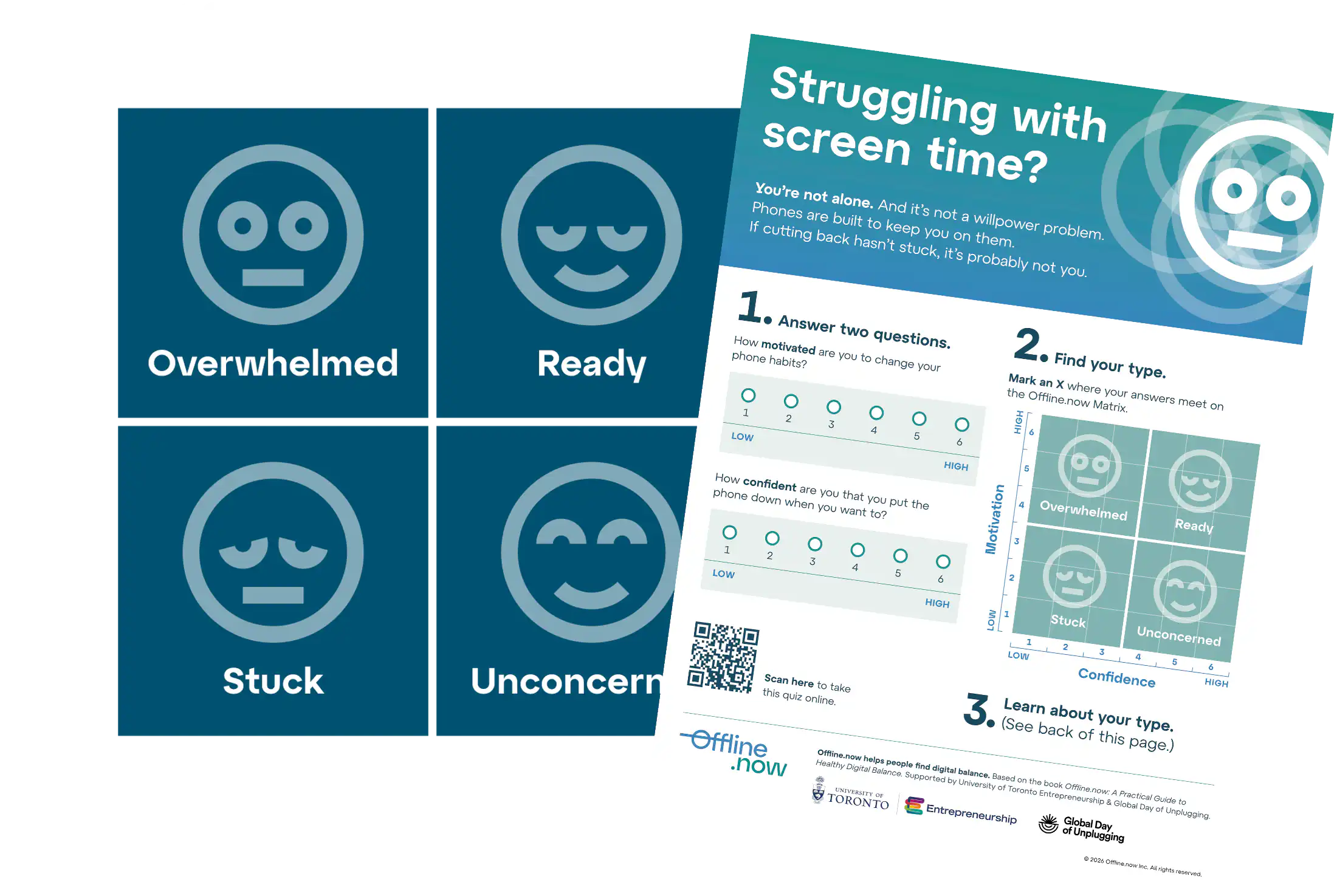
The Offline.now Matrix is your starting place. It puts a name to where you are right now without judgment, so you can take the right first step. Each quadrant offers practical strategies and actions that fit your life.
Want to go deeper? Our book, Offline.now A Practical Guide to Healthy Digital Balance, unpacks the full framework with quadrant-specific guidance designed to make meaningful change feel human, doable, and sustainable.
Available at
Digital balance is an ongoing conversation
Stay up-to-date with news and tips from our blog.
Rapid AI upgrades excite yet exhaust. Constant feature drops spark FOMO, black box worry, and pressure to automate everything. This article delivers quick ChatGPT anxiety solutions: time box usage into two daily blocks, keep an AI wish list to curb rabbit holes, pause and breathe before sending prompts, lock apps after 8pm, and remember you can leverage AI on your terms. Structured windows turn ChatGPT from stressor into tool, preserving sleep, motivation, and clarity daily.
Device free family time starts with a shared tech pact. Instead of nagging, gather everyone to list screen joys and pains, agree on dinner table and bedroom phone bans, and pick one screen free evening each week. Create a central charging station, swap scrolling for quick games or cooking together, and review the pact monthly to tweak rules. Families who protect conversation windows report richer connection, calmer bedtimes, and kids who learn lifelong digital balance.
Endless swiping can feel like a second job, draining self-esteem and hiding real connection. Pause all matching apps for a week to calm dopamine cravings, then rebuild offline confidence through hobby meet-ups, micro-volunteering, and friend introductions. When you reinstall, limit checks to two 15-minute windows, message only shared-interest matches, and suggest an in-person coffee within three exchanges. Intentional rules transform dating apps into tools instead of energy sinks, restoring mood and hope.
Forward head posture during screen marathons adds up to sixty pounds of neck strain. Raise monitors to eye level with books or a stand, hold phones at chin height, and set a thirty minute chime for movement. Cycle through quick chin tucks, shoulder rolls, and doorway chest openers while files load. Pair stretches with water breaks to lock habit and prevent stiffness. Daily micro resets relieve pain more effectively than occasional marathon yoga sessions alone.
Even thirty minutes of evening screen light can slash melatonin and delay sleep. This guide explains why blue wavelengths plus doomscrolling create nights, then shares a simple digital sunset ritual: taper screens two hours before bed, enable night filters and dim lamps, charge phones outside the door, and replace scrolling with books or gentle stretches. Red shift apps and CBT-I tools help, but turning them off an hour early keeps the ritual clean and effective.
Digital Pomodoro method upgrades the classic 25-5 rhythm for modern remote work. Schedule three morning sprints, launch a focus app to silence notifications, and treat each block like a client meeting. After four cycles, take a twenty minute recharge then repeat after lunch. The structure combats online temptations and hazy boundaries, training attention while preserving energy. Keep phones in another room, mark calendar slots busy, and watch productivity rise as fatigue and procrastination fall away.