Parental Behaviour Modelling for Digital Use

Parental behaviour modelling for digital use is the quiet truth that kids learn from what you do, not what you say about phones. Coaches help you audit your own habits honestly, narrate your tech choices out loud, and build shared device-free practices that work for the whole household. Offline.now connects you with therapists and coaches who lead with modeling.

Blog posts related to Parenting

Teens who used their phones more after 10 p.m. slept 20 minutes less (Zhao, 2026). The phone rules that hold name one place and one time.
Phubbing is snubbing someone for your phone. A 2026 review of 22 studies found feeling ignored does the harm. Protect one quiet moment a day.
Healthy technology habits are more sustainable when families focus on understanding the needs behind device use rather than simply imposing restrictions. Small, collaborative changes can build confidence and create routines that are easier to maintain over time.
When ADHD affects the rhythm of family life, mornings, homework, transitions, and bedtime can quickly become sources of daily stress. ADHD parent coaching can help by turning those pressure points into practical, repeatable systems. From routine-building and executive function support to behaviorally informed strategies and caregiver consistency, the right coaching can help families reduce chaos, strengthen follow-through, and create a calmer home environment, without expecting perfection.
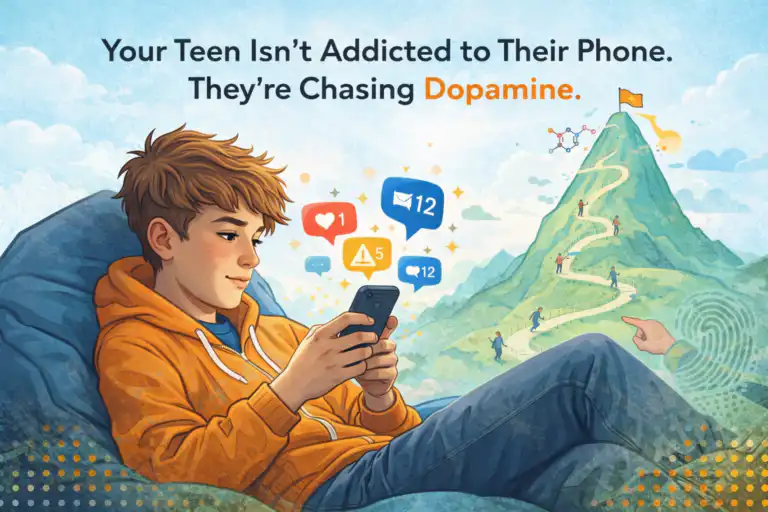
Your teen isn't weak, lazy, or addicted. They're responding exactly as their brain is wired to - and more often than not, what they're really feeling is overwhelmed. This piece explains the neuroscience behind teen phone use, why stress drives the behavior more than discipline ever will, and what parents can actually do about it.

Are Snapchat and TikTok actually dangerous for teens? The real risk isn’t the apps themselves—it’s how they blur privacy, permanence, and performance in ways adolescent brains aren’t equipped to manage. Drawing on clinical work and lived parenting experience, this post explains how online harm often unfolds, why shame makes safety worse, and how families can use practical, non-judgmental tools to help teens protect their agency, make safer choices, and ask for help before mistakes become permanent.