Get help with screen stress

Get screen stress help

Browse the Directory

Coaches, therapists, and guides - independent professionals trained in digital overload, burnout, and behavior change. Explore the directory and book a first meeting.

Know where to begin

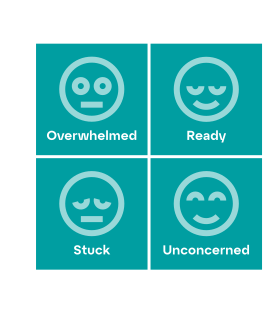
The Offline.now Matrix is your starting place. It puts a name to where you are right now without judgment, so you can take the right first step. Each quadrant offers practical strategies and actions that fit your life.

A 2x2 matrix with four boxes that represent the categories of overwhelmed, ready, stuck and unconcerned. With minimalist cartoon faces that represent each section.
Offline.now A Practical Guide to Healthy Digital Balance

Want to go deeper? Our book, Offline.now A Practical Guide to Healthy Digital Balance, unpacks the full framework with quadrant-specific guidance designed to make meaningful change feel human, doable, and sustainable.

Available at
Available at Amazon

Digital balance is an ongoing conversation

Stay up-to-date with news and tips from our blog.
Winter can leave ADHD brains feeling “tired but wired”—exhausted, restless, and pulled toward constant stimulation. This post explains why shorter days, less movement, and more screen exposure intensify ADHD restlessness, and why it’s a nervous system response, not a discipline issue. With simple, regulating swaps like micro-movement, sensory anchors, and gentler evening light, you’ll learn how to clear the winter fog without spiraling into digital overload or self-blame.
Digital burnout isn’t just mental, it lives in the body. Drawing on kinesiology, this post reveals the physical and nervous system patterns behind compulsive screen use, from chronic fight-or-flight to energy depletion. It explains why willpower-based tech boundaries often fail and introduces the BAMBOO Method, a somatic approach to building flexible, sustainable resilience especially for neurodivergent, high-performing leaders navigating constant digital demand.
It can happen without conflict or intention: two people together, quietly pulled into separate screens. This post explores how phones can subtly interfere with connection in relationships, why it’s not about blame or addiction, and how patterns like partner phubbing affect emotional closeness. With gentle, realistic micro-swaps—no bans or ultimatums—you’ll learn how to restore presence, reduce resentment, and reconnect in small moments that actually fit real life.
If you have ADHD, procrastination isn’t a character flaw—it’s a nervous system response. This post breaks down why starting tasks can feel impossible, how emotion regulation and executive function play a role, and why willpower often fails. With practical, brain-friendly strategies like tiny starts and dopamine bridges, you’ll learn how to move from stuck to starting without shame. You don’t need more discipline. You need safer, kinder ways to begin.
Winter’s long, dark evenings can quietly pull us into hours of scrolling that leave us more tired, not less. This post explores why winter screen time hits differently, how dopamine, blue light, and sleep disruption play a role, and why it’s not a willpower issue. Most importantly, it offers gentle, realistic swaps no rigid rules that help you restore energy, improve mood, and find comfort that truly replenishes you during the colder months.
The first holiday after divorce doesn’t have to feel like a loss. In fact, mine turned out sweeter, calmer, and surprisingly joyful. By letting go of old expectations and creating simple new traditions with my kids, the season became ours again: cozy, meaningful, and enough. If you’re navigating this transition, you’re not alone. With a few gentle shifts, your holidays can feel lighter and more aligned with what truly matters. Let’s make them yours.