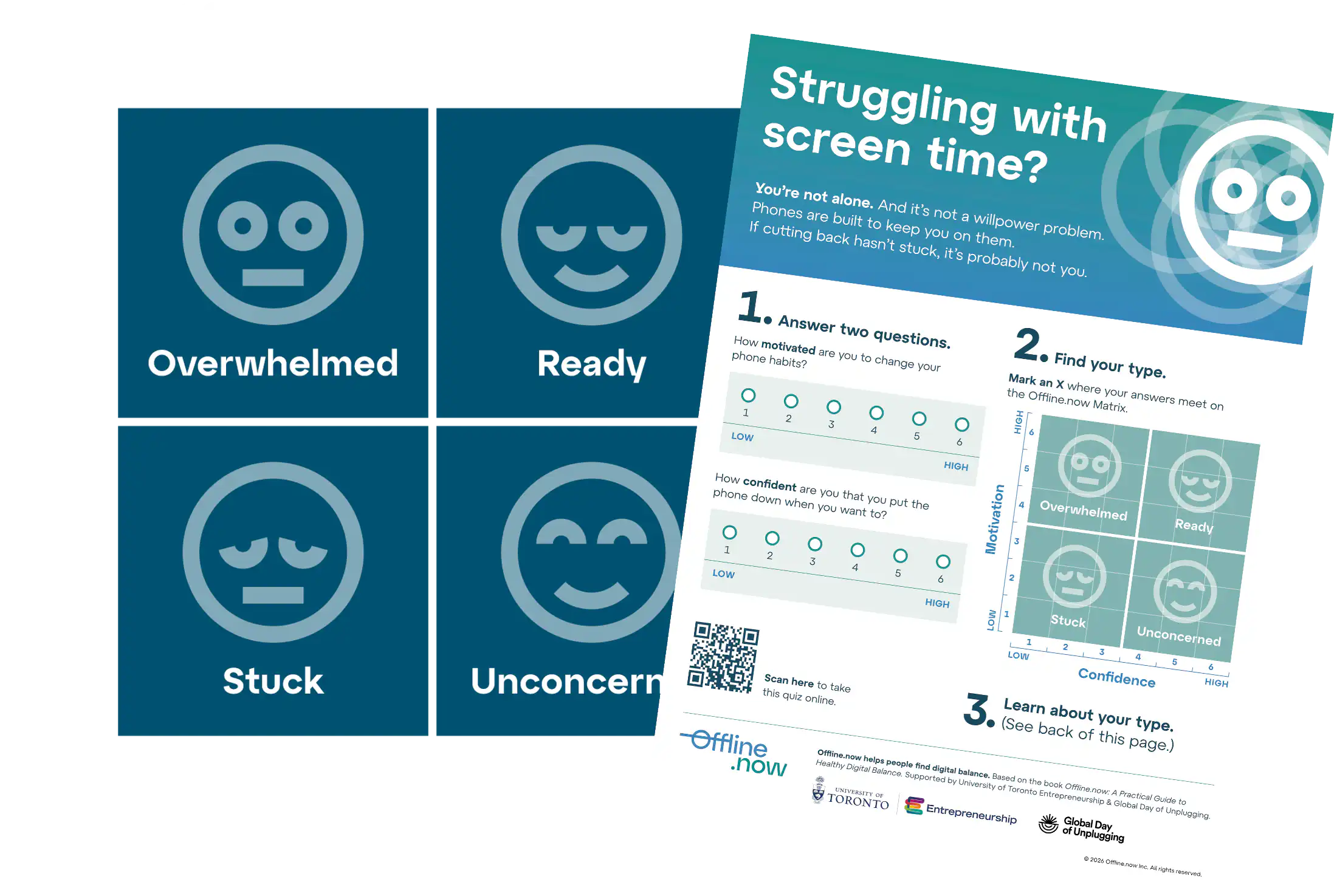
Find your starting place.

Answer 2 questions. Get your type, your first step, and free worksheet.

part of

University of Toronto Entrepreneurship Logo

Canada’s Ambassador for

It was never just a willpower problem.

Most screen advice starts with rules. Offline.now starts with confidence. Find the starting place that fits where you are right now.

Two questions. Four starting places.

The Offline.now Matrix looks at two things: motivation and confidence. Take the quiz online for your personalized result, or use the free worksheet on paper. Either way, you get a starting place and one practical first step.

A community behind the first step

750+ therapists, coaches, counsellors, social workers, and guides are part of the Offline.now network. The Matrix helps you begin. The community helps when the next step gets personal.
Offline.now A Practical Guide to Healthy Digital Balance

Go deeper into the Matrix

The quiz and worksheet help you find your starting place. The book takes you further, with type-specific guidance for changing screen habits in a way that feels practical and doable.

Available at
Available at Amazon

Digital balance is an ongoing conversation

Read stories, ideas, and practical guidance from the Offline.now community.

Your online presence is part of your resume. Recruiters and employers often Google candidates before making decisions, and what they find can shape your opportunities. A digital footprint audit helps you clean up outdated content, secure old accounts, and showcase a professional image. This guide walks you through practical steps to search yourself, manage social media, and boost your online reputation, so your digital presence supports your career growth instead of holding you back.
Parenting today means navigating a world of instant communication, artificial intelligence, and constant fear. While overprotection aims to keep children safe, it often undermines resilience and independence. Setbacks, risks, and unstructured play are essential for growth, yet many kids miss these opportunities. From summer camps to screen-free family dinners, intentional choices help children build confidence, social skills, and emotional strength preparing them for life’s challenges while preserving the closeness modern families value.
Desire doesn’t vanish in long-term relationships, it shifts. After the honeymoon phase, brain chemistry changes, daily stress builds, and screen time steals intimacy. Many couples mistake fading passion as a sign something is “wrong,” but that’s not true. Desire often needs nurturing. By understanding responsive vs. spontaneous desire, reducing digital distractions, and focusing on connection over performance, couples can reignite closeness. Passion isn’t lost forever; it can be rebuilt with curiosity, consent, and intentional time together.
Does your inbox feel like it’s overflowing with unwanted newsletters and endless promotions? A cluttered inbox doesn’t just waste time, it drains focus and adds to mental stress. In this guide, you’ll learn a simple 15-minute unsubscribe sprint to quickly clear out digital noise and move closer to inbox zero. With step-by-step instructions and ongoing maintenance tips, this routine helps ambitious professionals reclaim control, boost productivity, and create lasting clarity.
Time blindness is a common yet often misunderstood challenge for individuals with ADHD. It goes beyond poor time management: impacting focus, planning, and emotional regulation. The ADHD brain naturally gravitates toward immediate stimulation, making delayed rewards difficult to conceptualize. Research highlights that effective support requires a multifaceted approach, blending cognitive, behavioral, psychological, and environmental strategies. By reframing time perception and building layered systems, individuals with ADHD can better manage productivity and daily routines.
Is your calendar running your life instead of helping you manage it? In today’s always-on work culture, nonstop meetings and notifications can fuel stress, disrupt sleep, and drain focus. This guide unpacks the hidden cost of calendar anxiety and offers a simple solution: white-space planning. By intentionally leaving room to pause, reflect, and recharge, you can prevent burnout, sharpen your focus, and reclaim control of your time, one small block at a time.