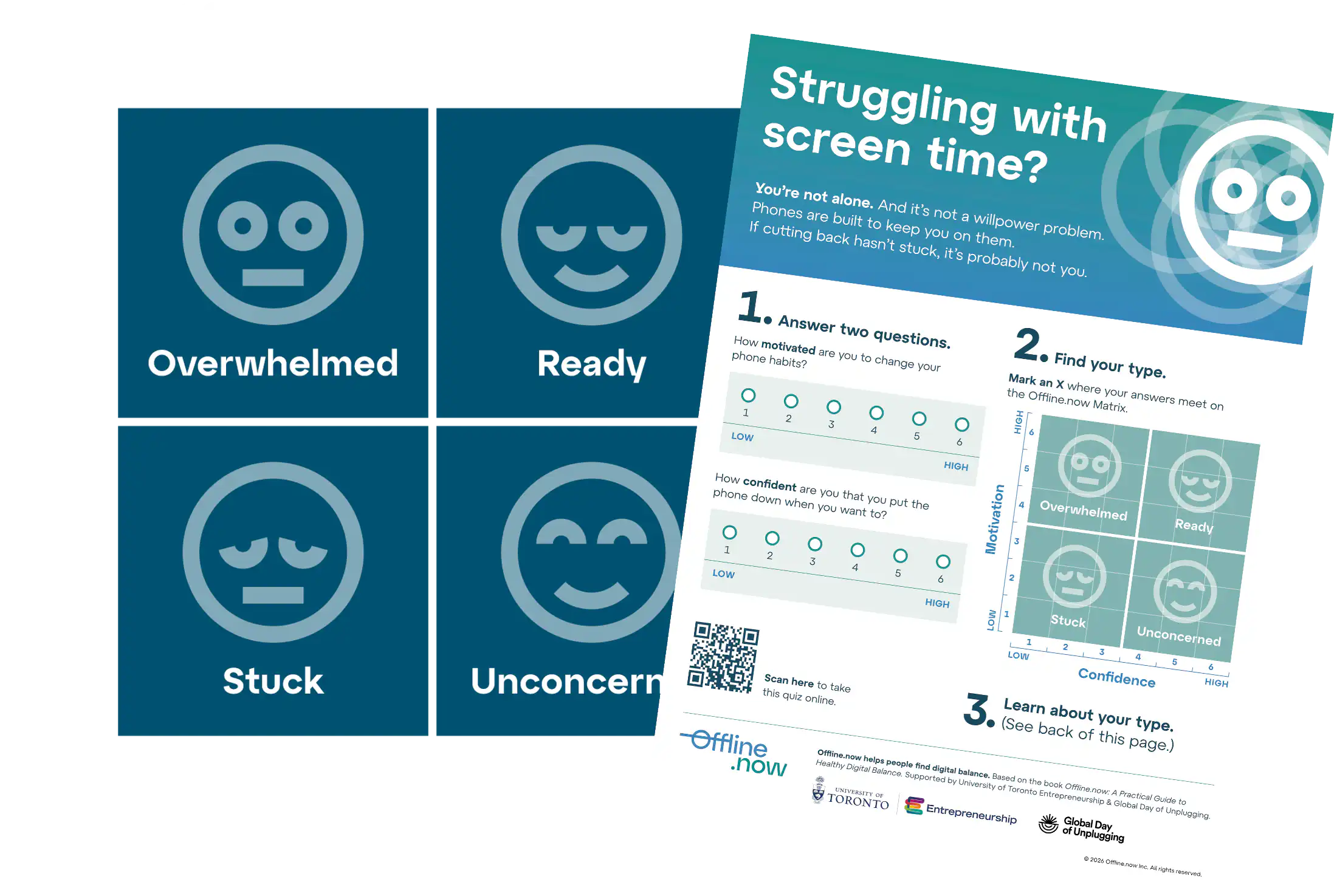
Most screen advice starts with rules. Offline.now starts with confidence. Find the starting place that fits where you are right now.
Two questions. Four starting places.
The Offline.now Matrix looks at two things: motivation and confidence. Take the quiz online for your personalized result, or use the free worksheet on paper. Either way, you get a starting place and one practical first step.
The quiz and worksheet help you find your starting place. The book takes you further, with type-specific guidance for changing screen habits in a way that feels practical and doable.
Divorce after 50 can disrupt confidence, identity, routines, and plans for the future, but rebuilding is possible. This guide explores practical ways women can regain clarity and self-trust through small decisions, self-compassion, visible wins, and structured support.
ADHD can make workplace priorities, task initiation, and follow-through harder—even for highly capable professionals. This article explores how ADHD coaching can reduce friction, clarify priorities, and build practical systems for getting important work started and completed. It also covers brain-friendly strategies for managing competing demands, protecting focus, reducing interruptions, and creating consistent accountability.
Digital overwhelm can affect how we work, connect, and use our phones. From LinkedIn FOMO and relationship tension to digital detoxes that fall apart, lasting change starts with understanding your current habits and making small, sustainable adjustments to your environment.
Breaking a phone habit is not simply a matter of having more discipline. Stress, boredom, work demands, and exhausted decision-making can all reinforce compulsive phone use. Sustainable change starts with practical boundaries, smaller steps, and support that matches your situation. Learn how to build healthier phone habits, reduce doomscrolling, and create digital boundaries that actually last.
Digital wellness with ADHD is not about relying on willpower or cutting out technology altogether. It is about choosing small, practical changes that fit your real life. By focusing on one friction point at a time, using clear if-then plans, and building accountability, adults with ADHD can create healthier screen habits that are easier to maintain.
Healthy technology habits are more sustainable when families focus on understanding the needs behind device use rather than simply imposing restrictions. Small, collaborative changes can build confidence and create routines that are easier to maintain over time.
Offline.now helps people change their phone habits without shame.