The free Find Your Starting Place worksheet
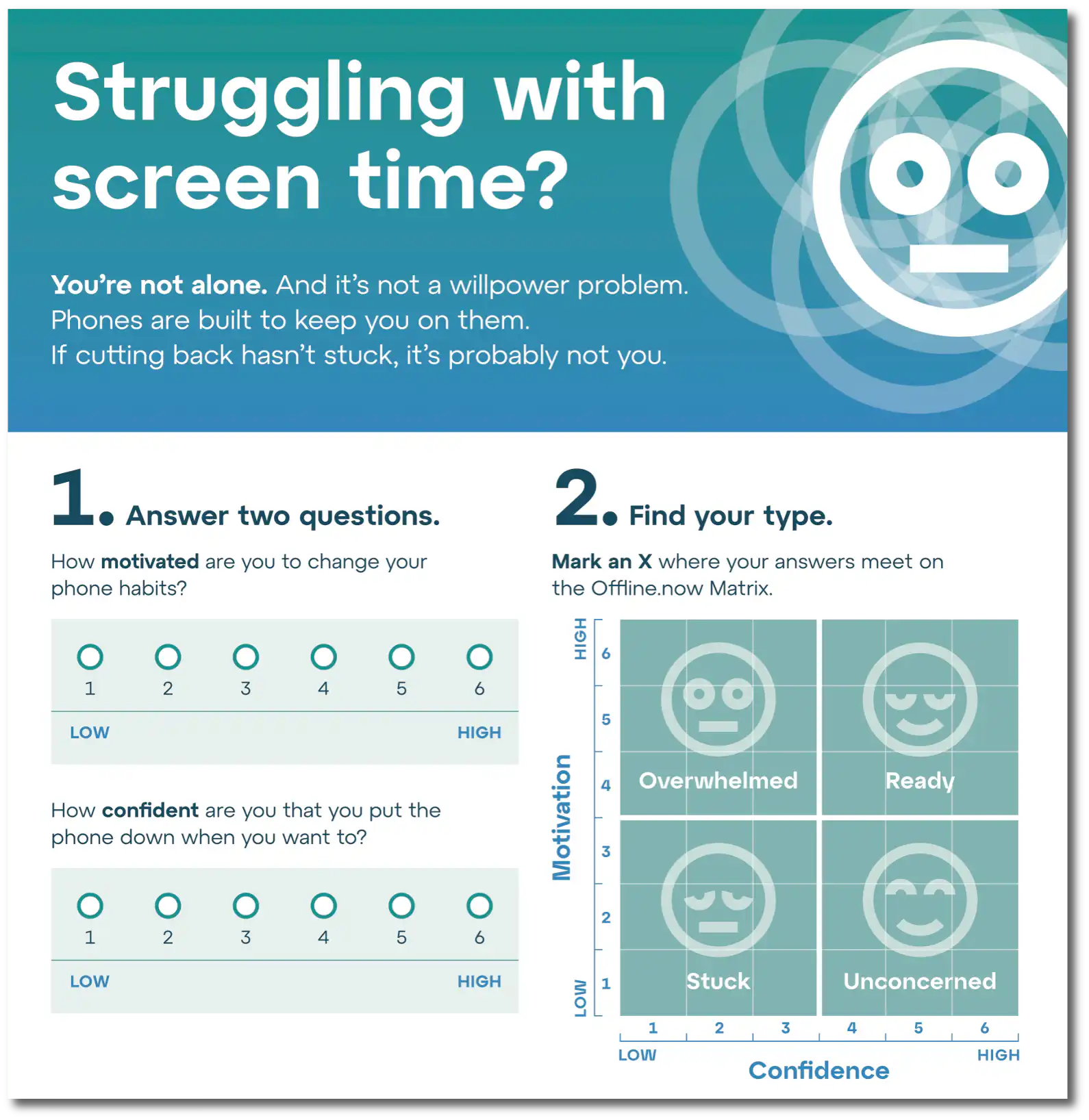
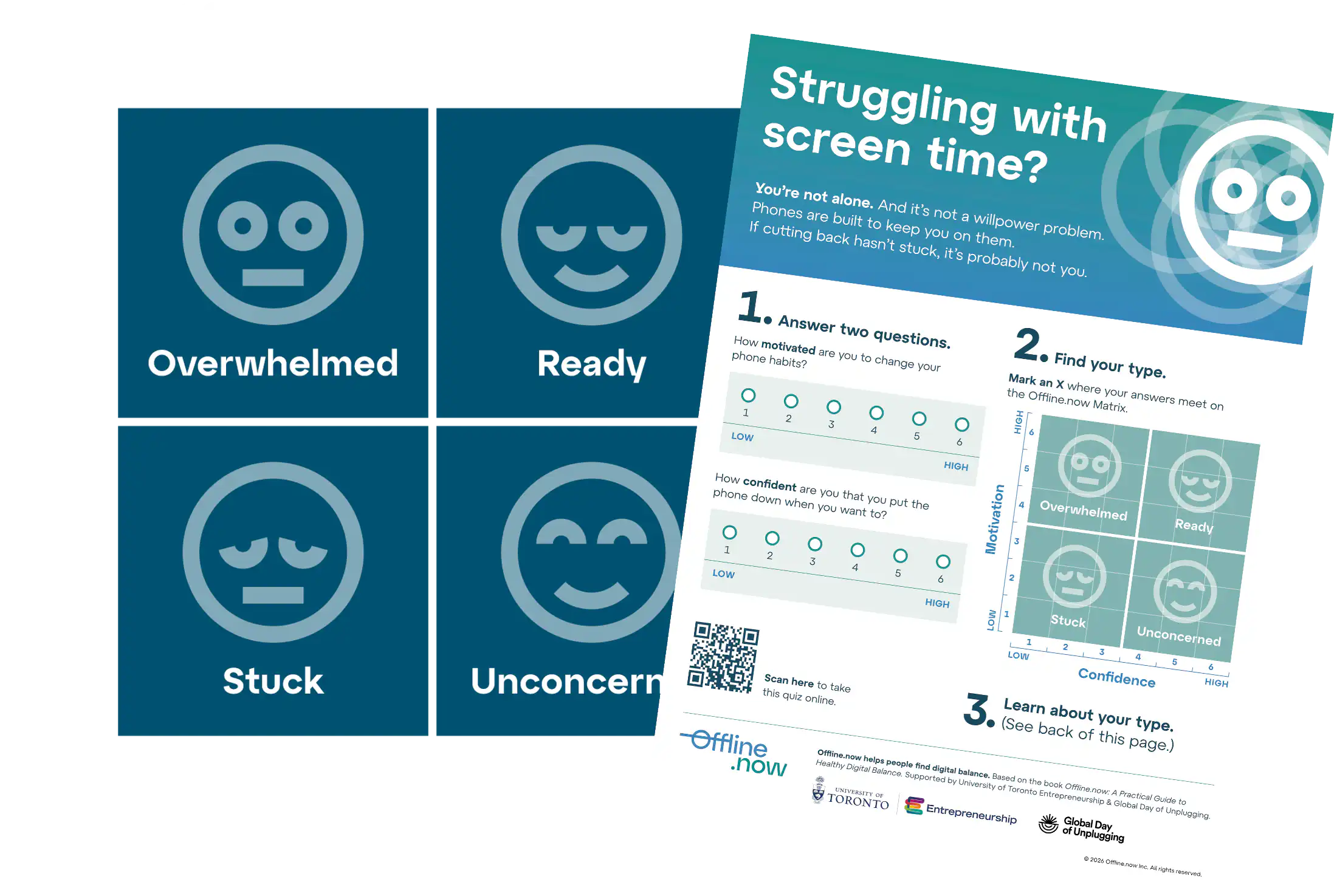
Two questions. Four starting places. One printable first step.
Download it, print it, or use it with a family, class, client, team, or community group.
No email needed to download.
Built for libraries, workplaces and schools
How it works
The worksheet is the paper version of the Offline.now Matrix. Answer two questions about motivation and confidence, find your starting place, and choose one small first step. Take the quiz online for a personalized result, or print the worksheet and use it on paper.
Use it in your community
The worksheet is free to share. Use it as a conversation starter, a workshop handout, or a simple first step for people who want a healthier relationship with screens.
Libraries
Offer it on shelves, in branch programs, or as part of digital-wellbeing displays. Co-branded versions may be available.
Schools
Give students and families a shame-free starting point for screen-habit conversations.
Workplaces
Add it to wellness programming as a practical, low-pressure first step teams can actually use.
Go deeper into the Matrix
The quiz and worksheet help you find your starting place. The book takes you further, with type-specific guidance for changing screen habits in a way that feels practical and doable.
Available at
Digital balance is an ongoing conversation
Read stories, ideas, and practical guidance from the Offline.now community.
Rest isn’t just about stopping it’s a skill you can train. In today’s hyperconnected world, digital rest is essential for focus, sleep, and mental health. By building intentional routines, setting boundaries, and practicing mindful disconnection, you can rewire your brain to truly log off. This guide explains why digital rest matters, how constant screen use drains energy, and the simple strategies that help remote workers, students, and professionals reclaim balance and prevent burnout.
Feeling overwhelmed by endless scrolling? A social media cleanse can help you reset without going cold turkey. Our 30-day calendar gives you one small, achievable challenge each day from turning off notifications to creating app-free zones that builds confidence and reduces stress. By stacking these “tiny wins,” you’ll experience a gradual dopamine reset, improve focus, and reclaim time for what matters most. Start your journey toward digital balance.
YouTube’s autoplay can turn one quick video into an endless binge watching spiral, leaving you overwhelmed and unfocused. If you’ve ever lost hours to the algorithm, you’re not alone. This guide shows you how to reclaim control with a simple three-step routine: disable autoplay, build a “watch later” habit, and set a 3-video limit. By creating intentional boundaries, you’ll break the multitasking cycle, sharpen your focus, and free up time for what really matters.
If you’ve ever downloaded the “perfect” planning app only to abandon it days later, you’re not alone. For people with ADHD, the very tools marketed as productivity hacks often trigger distraction, dopamine chasing, and task paralysis. Complex features and constant notifications overwhelm executive function, leaving you more stuck than supported. This post unpacks why digital systems backfire for neurodivergent brains and offers low-friction planning strategies that reduce overwhelm and help you create routines that actually stick.
Screens are everywhere, but real joy comes from stepping away. This guide offers 10 engaging digital-free activities that help families, friends, and wellness-seekers reconnect offline. From phone-free dinners and analog game nights to mindful nature walks and journaling, each idea is practical, fun, and easy to try. Whether you’re craving laughter, creativity, or calm, these screen-free ideas provide a refreshing antidote to digital overwhelm and create meaningful moments that last far beyond the scroll.
The shift from summer freedom to fall structure can feel overwhelming, deadlines pile up, notifications never stop, and stress skyrockets. This post-summer burnout is more common than you think, and it’s fueled by digital overwhelm and constant connectivity. The good news? You don’t need a full detox retreat. By adding small, intentional micro-habits; like 15-minute resets, alert regulation, and sleep hygiene; you can ease re-entry anxiety and build a sustainable productivity reset for the semester or work season ahead.