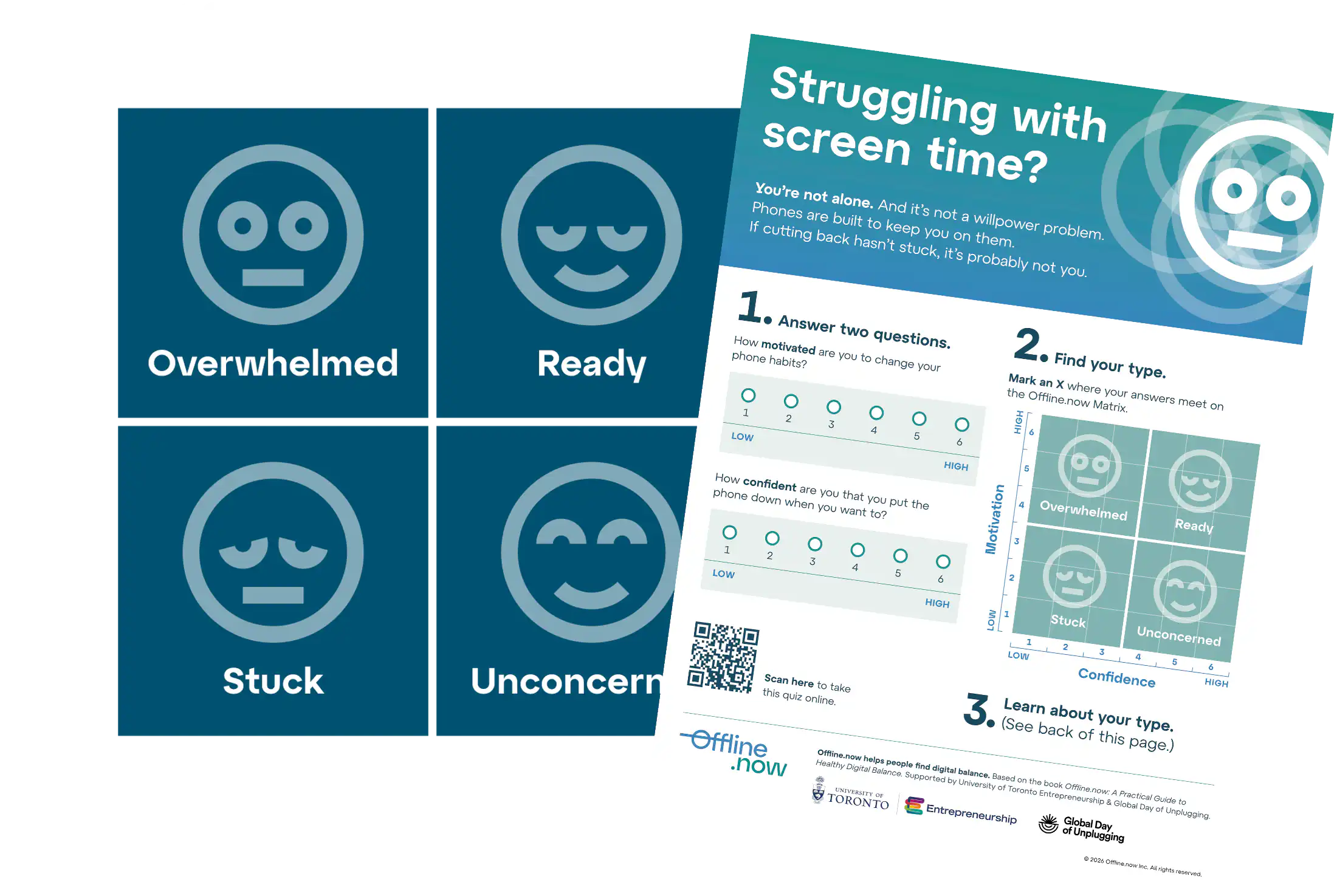
The free Find Your Starting Place worksheet

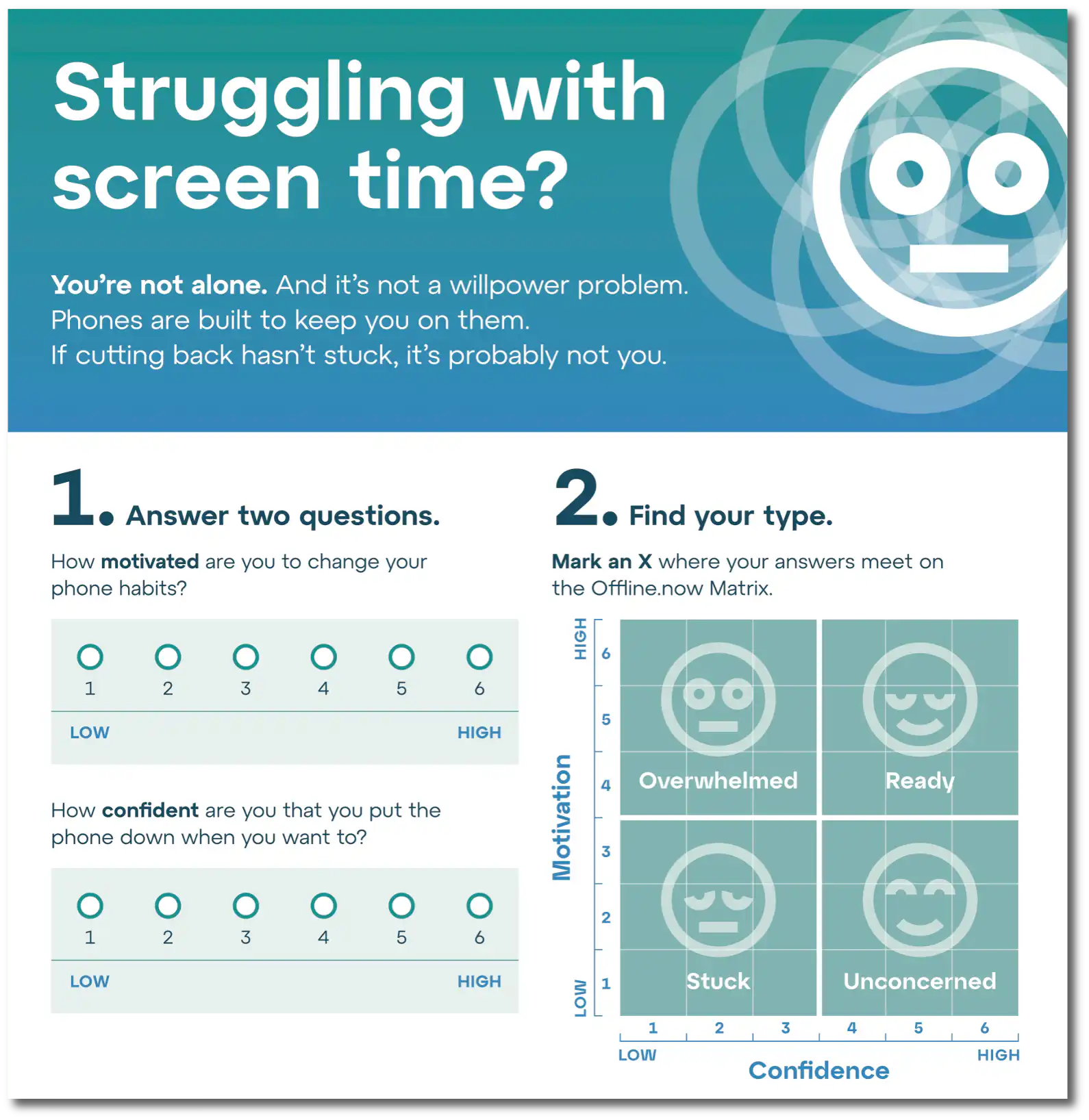
Two questions. Four starting places. One printable first step.

Download it, print it, or use it with a family, class, client, team, or community group.

No email needed to download.

Built for libraries, workplaces and schools

Toronto Public Library
Halifax Public Library
Waterloo Public Library
Kitchener Public Library
St. Catherines Public Library

How it works

The worksheet is the paper version of the Offline.now Matrix. Answer two questions about motivation and confidence, find your starting place, and choose one small first step. Take the quiz online for a personalized result, or print the worksheet and use it on paper.

The worksheet sorts you into one of four types, and each type has its own full guide: Stuck, Overwhelmed, Ready, and Unconcerned.

Use it in your community

The worksheet is free to share. Use it as a conversation starter, a workshop handout, or a simple first step for people who want a healthier relationship with screens.

Libraries

Offer it on shelves, in branch programs, or as part of digital-wellbeing displays. Co-branded versions may be available.

Schools

Give students and families a shame-free starting point for screen-habit conversations.

Workplaces

Add it to wellness programming as a practical, low-pressure first step teams can actually use.

FAQ

Is the worksheet really free?

Yes. Download the PDF and share as many copies as you like, with no email address required. It’s free for individuals and free for groups, and libraries, schools, and workplaces are encouraged to build it into their programs. Co-branded versions may be available for library systems: email us and ask.

What’s the difference between the quiz and the worksheet?

They ask the same two questions about motivation and confidence, and they land you in the same place. The free quiz is two questions and takes less than a minute: it shows you your type and points you to your starting place. The worksheet does the same on paper, at your own pace.

Do I need the quiz to use the worksheet?

No. The worksheet stands alone: answer the two questions on the page, find your type, and choose your first step there. The quiz adds a personalized result sent by email. Use whichever suits you, or both, and retake either when life shifts, since your type is a state, never a fixed trait.

Updated July 2026

Offline.now A Practical Guide to Healthy Digital Balance

Go deeper into the Matrix

The quiz and worksheet help you find your starting place. The book takes you further, with type-specific guidance for changing screen habits in a way that feels practical and doable.

Available at
Available at Amazon

Digital balance is an ongoing conversation

Read stories, ideas, and practical guidance from the Offline.now community.

Online shopping is consuming - but your wallet (and well-being) don’t have to suffer. “Shop Less, Live More” breaks the doom-scroll-to-doorstep cycle with a science-backed, 7-step plan to reduce online shopping. Learn how 24-hour cool-off timers, ad-free inbox filters, and a 30-day no-buy challenge turn impulse clicks into mindful purchasing. We’ll show Millennials and Gen Z pros how to cut e-commerce spending, tame online shopping addiction, and swap retail therapy for richer offline joys-no guilt required.
Swap screen glare for sunshine this season. Our guide shares ten creative, budget-friendly digital-free summer activities that pull families and friends off the couch and into real-world connection. Hike at dawn, host a backyard game night, craft a film-camera photo walk, or declare a screen-free Sunday potluck - each idea sparks movement, laughter and genuine conversation while lowering stress and boosting sleep. Think of them as mini detoxes: small swaps that build a healthier relationship with tech.
News should inform you, not immobilize you. Yet constant alerts, live blogs, and doomscrolling create news fatigue - a mix of anxiety, distraction, and sheer mental drain. This guide shows you how to break the cycle without quitting headlines: curate just a few trusted sources, schedule two short check-ins a day, swap endless scrolling for summary digests, and reset with mindfulness or an offline hobby. Small, consistent tweaks transform the news from mood-killer to manageable part of a balanced media diet.
Your feed is more than filler - it’s fuel for your thoughts. Swap doomscroll fatigue for daily inspiration by curating your social media feed with intention. Mute or hide posts that spike anxiety, unfollow accounts that spark comparison, and actively like content that educates, uplifts, or makes you laugh. Each tap reshapes the algorithm, turning endless scrolls into positive social scrolling. Within days you’ll notice lighter moods, sharper focus, and a timeline that finally feels like your space.
Your alarm shouldn’t catapult you into email overload. Trade the reflexive scroll for a phone-free morning routine and watch the day transform. Research shows that spending even the first sixty minutes screen-free steadies cortisol, sharpens focus, and lifts mood. Instead of notifications, greet the dawn with journaling, gentle stretches, or a quiet cup of coffee. Within a week you’ll notice calmer thoughts, clearer priorities, and more intentional tech use - proof that one morning without phone can reset your whole day.
Summer begs for sand between your toes, not smartphones in your palm. A summer digital detox - even one weekend swaps blue light for blue skies and leaves you calmer, sharper, and better rested. Research shows brief screen breaks slash cortisol, deepen sleep, and rekindle face-to-face connection. Start small: phone-free dinners, hidden social apps, a Saturday screen pause. Within days you’ll notice looser shoulders and richer conversations. Unplug now, and let your best summer memories happen unfiltered.