The free Find Your Starting Place worksheet

Two questions. Four starting places. One printable first step.

Download it, print it, or use it with a family, class, client, team, or community group.

No email needed to download.

Built for libraries, workplaces and schools

Toronto Public Library
Halifax Public Library
Waterloo Public Library
Kitchener Public Library
St. Catherines Public Library

How it works

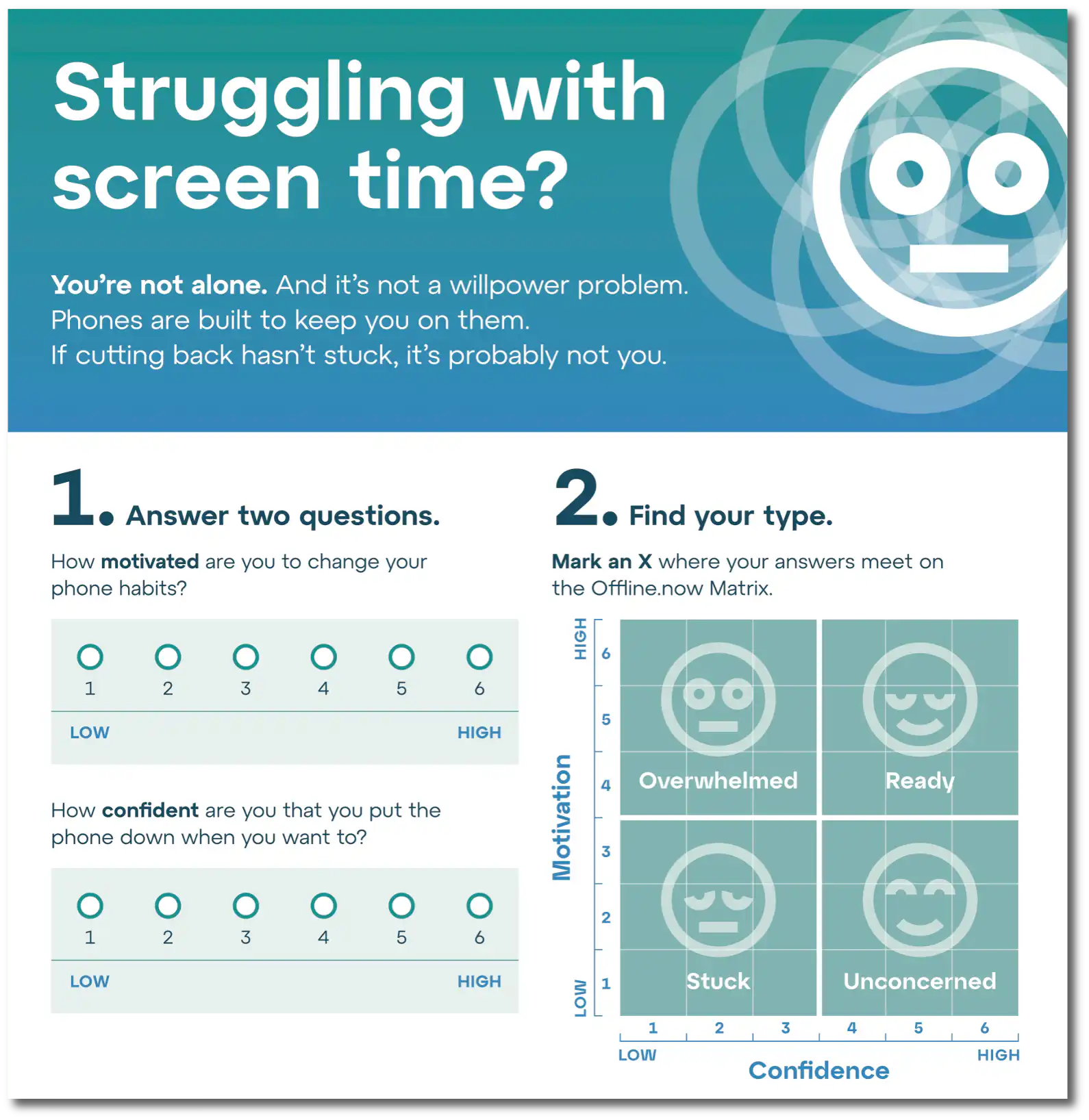
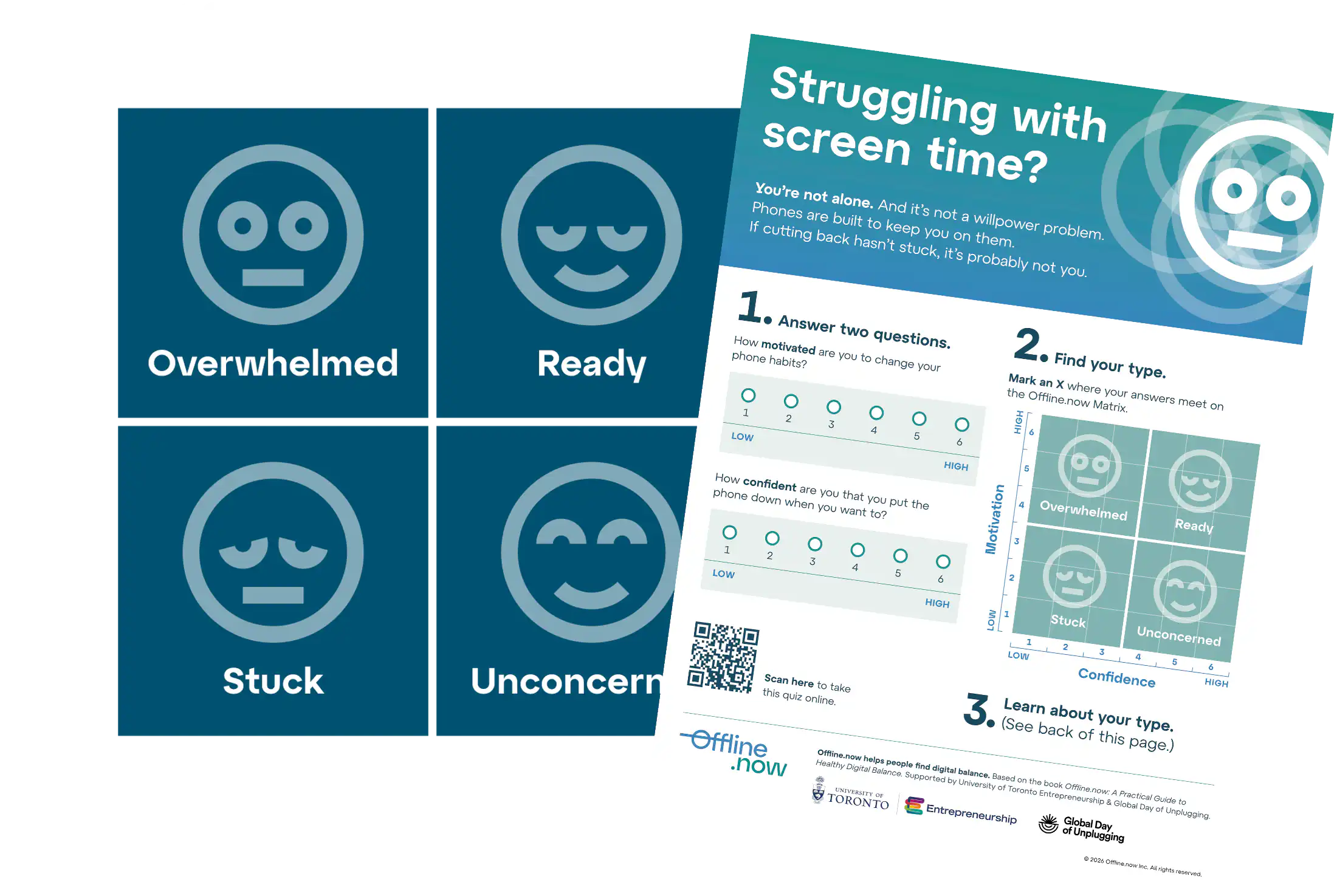
The worksheet is the paper version of the Offline.now Matrix. Answer two questions about motivation and confidence, find your starting place, and choose one small first step. Take the quiz online for a personalized result, or print the worksheet and use it on paper.

Use it in your community

The worksheet is free to share. Use it as a conversation starter, a workshop handout, or a simple first step for people who want a healthier relationship with screens.

Libraries

Offer it on shelves, in branch programs, or as part of digital-wellbeing displays. Co-branded versions may be available.

Schools

Give students and families a shame-free starting point for screen-habit conversations.

Workplaces

Add it to wellness programming as a practical, low-pressure first step teams can actually use.
Offline.now A Practical Guide to Healthy Digital Balance

Go deeper into the Matrix

The quiz and worksheet help you find your starting place. The book takes you further, with type-specific guidance for changing screen habits in a way that feels practical and doable.

Available at
Available at Amazon

Digital balance is an ongoing conversation

Read stories, ideas, and practical guidance from the Offline.now community.

We’re more connected than ever, yet many of us feel increasingly alone. Hours spent online may boost virtual interactions, but they quietly weaken our real-world bonds. Likes and comments can’t replace meaningful conversations, and over time, screens can crowd out the moments that truly matter. This is the crisis of digital loneliness: a full feed, but an empty heart. Reclaiming balance starts with protecting offline time and choosing authentic connection over endless scrolling.
Fitness tracking can be a powerful tool but when every step, heartbeat, and sleep cycle is measured, the numbers can start to own you. Instead of boosting motivation, constant monitoring often fuels stress, sleep tracking anxiety, and wearable overload. This post explores when tracking crosses the line from helpful to harmful, and how to reset with mindful strategies that protect your focus, rest, and overall well-being while still reaping the benefits of technology.
Social media can connect, educate, and even support well-being, but only if you use it with intention. Without limits, the very tools that bring us closer can also fuel anxiety, overload, and self-doubt. The positive effects of social media are real, but they vanish when scrolling becomes compulsive. This guide shows you how to practice mindful digital use, curating your feed, setting boundaries, and staying self-aware so you can keep the benefits without slipping into the risks.
Every generation faces a wave of technology that sparks both excitement and fear. From television’s "zombie effect” warnings in the 1950s to today’s concerns over TikTok and infinite scroll, tech anxiety is hardly new. Yet while the platforms evolve, the core challenge remains: balancing connection with well-being. By tracing the history of media panics, we can see patterns that help us respond more wisely today: choosing mindful, sustainable digital habits rather than falling into cycles of fear or overuse.
Struggling to stay focused during study sessions? You’re not alone, distractions are everywhere, but the right sounds may help. Science shows that focus playlists, brown noise study music, and Pomodoro tracks can create a steady environment that sharpens concentration and prevents burnout. But not all audio works: podcasts, for example, often overload the brain. Learn how to test which sound strategy works best for you, and build a personalized audio routine that truly supports your productivity.
Digital wellness tools from screen-time apps to hybrid coaching platforms are reshaping how we manage focus, sleep, and mental health. While early evidence shows promise, questions remain about long-term impact, equity, and privacy. This review highlights what works, where risks lie, and why hybrid approaches offer the most balanced path forward. With clear research gaps and urgent policy needs, the future of healthy tech boundaries depends on evidence-driven action across academia, industry, and regulation.