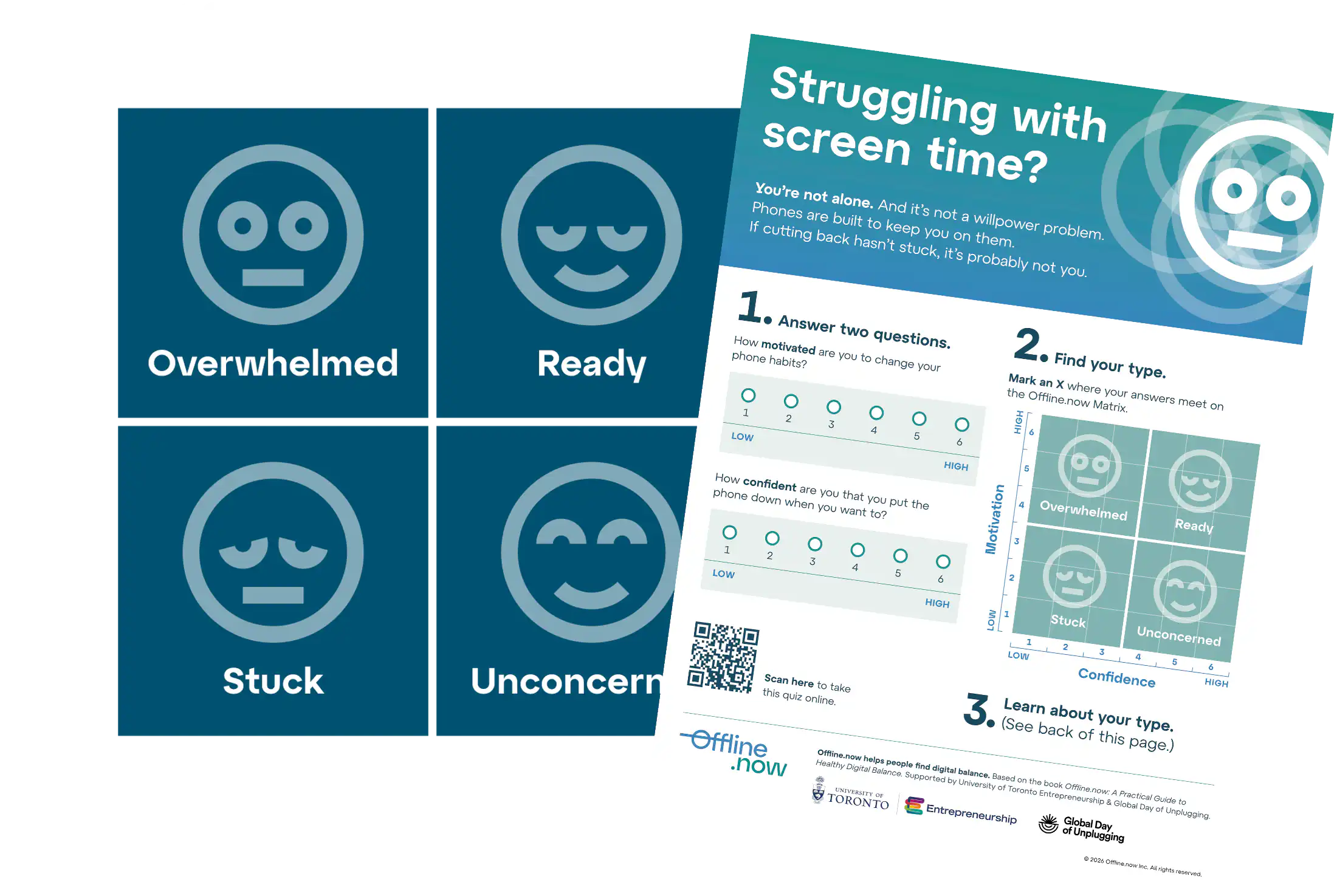
The free Find Your Starting Place worksheet

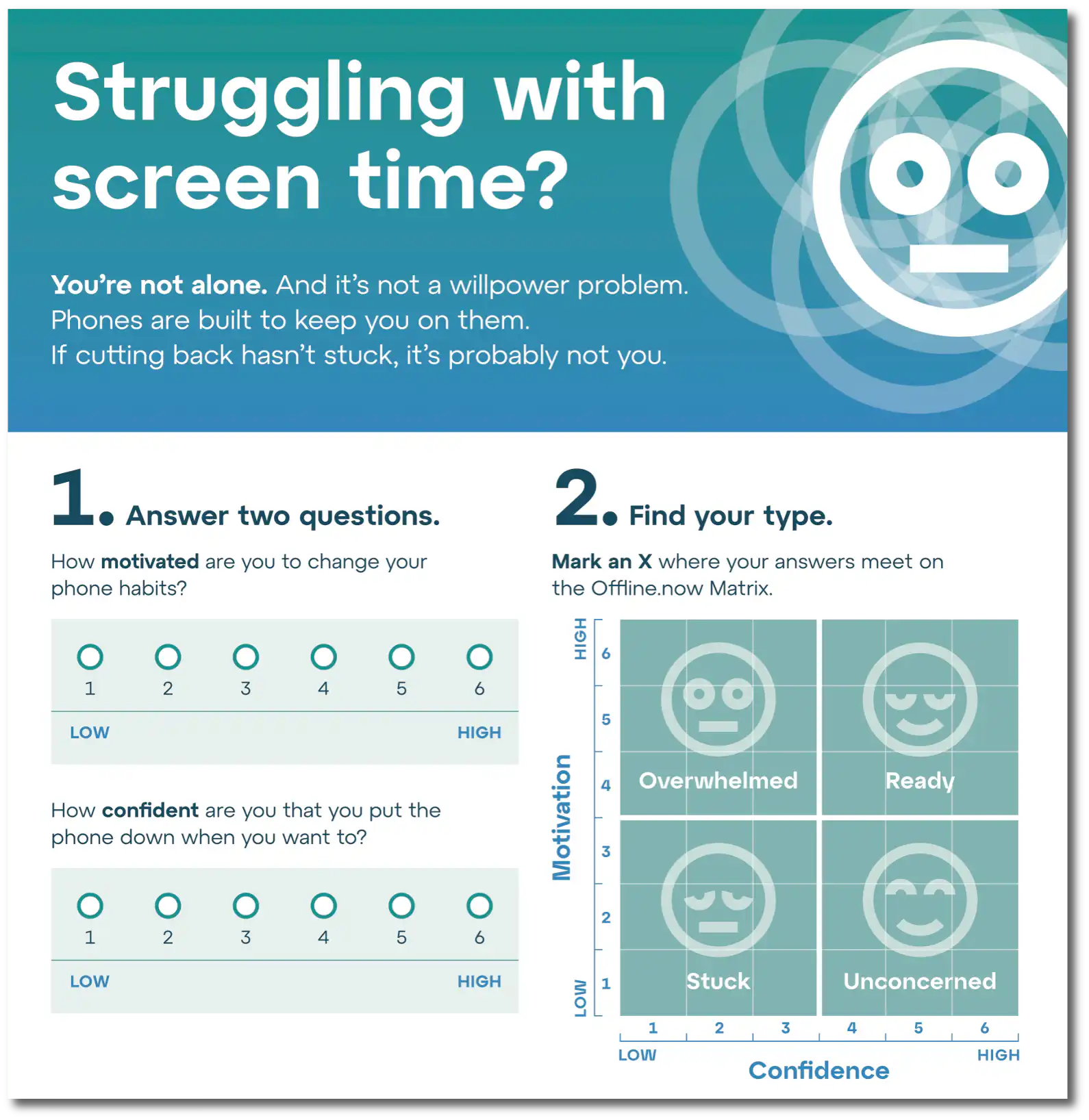
Two questions. Four starting places. One printable first step.

Download it, print it, or use it with a family, class, client, team, or community group.

No email needed to download.

Built for libraries, workplaces and schools

Toronto Public Library
Halifax Public Library
Waterloo Public Library
Kitchener Public Library
St. Catherines Public Library

How it works

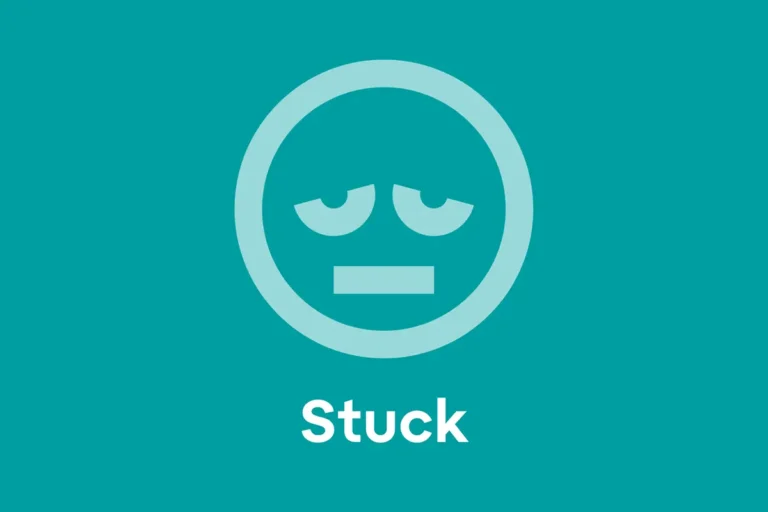
The worksheet is the paper version of the Offline.now Matrix. Answer two questions about motivation and confidence, find your starting place, and choose one small first step. Take the quiz online for a personalized result, or print the worksheet and use it on paper.

Use it in your community

The worksheet is free to share. Use it as a conversation starter, a workshop handout, or a simple first step for people who want a healthier relationship with screens.

Libraries

Offer it on shelves, in branch programs, or as part of digital-wellbeing displays. Co-branded versions may be available.

Schools

Give students and families a shame-free starting point for screen-habit conversations.

Workplaces

Add it to wellness programming as a practical, low-pressure first step teams can actually use.
Offline.now A Practical Guide to Healthy Digital Balance

Go deeper into the Matrix

The quiz and worksheet help you find your starting place. The book takes you further, with type-specific guidance for changing screen habits in a way that feels practical and doable.

Available at
Available at Amazon

Digital balance is an ongoing conversation

Read stories, ideas, and practical guidance from the Offline.now community.

LinkedIn anxiety sparks career FOMO every time a promotion post pops up. This toolkit swaps comparison for clarity in five steps: schedule two 15-minute LinkedIn blocks, mute trigger accounts, log three weekly wins to anchor self-worth, send one intentional outreach note, and unplug for a LinkedIn-free weekend each month. These habits cut distraction, protect sleep, and sustain meaningful networking. Add Friday progress logs and watch stress drop while real opportunities rise.
Instagram Reels flood your brain with endless novelty, fast swipes, and algorithmic rewards, making focus vanish. If you lose time, feel jittery without the app, or scroll during tasks, you’re edging toward compulsive use. This guide breaks the loop with a four step plan: log every scroll trigger, silence push alerts, set daily caps, and run weekend uninstalls. Mindful viewing plus dopamine detox swaps Reels for real life rewards so attention, sleep, and mood rebound.
TikTok rapid fire feed hijacks dopamine and drains hours. Track triggers for two days, logging place, mood, and time of every swipe. Export favorites, log out everywhere, delete the app, and hand the store password to a friend. Swap cravings with brisk walks, push ups, or quick voice notes. FOMO waves will pass; breathe, reread your trigger list, and mark another screen free evening. Within a week reclaimed time boosts sleep, focus, and creativity again.
Micro stressors like battery anxiety and nonstop alerts quietly raise cortisol all day. Start a 48 hour experiment: park phone three feet away while working, stash chargers in key spots, and silence one low value app. Log mood and focus every two hours. Most users report calmer breath, faster task switching, and deeper evening relaxation within days. Stack additional tweaks weekly until stress recedes to background whisper. Celebrate gains and refine boundaries that keep tech.
Digital overwhelm solutions start with acceptance, not shame. If motivation feels flat, use micro moves: power pause phones off for five minutes, leave the device outside the bedroom tonight, or read one printed page before scrolling. Label negative self talk and reframe: “I haven’t succeeded yet.” Chart offline versus online feelings to spotlight energy leaks. Each tiny win boosts dopamine, restoring momentum that nudges you from stuck toward action without requiring heroic forty eight detoxes.
Digital minimalism tips help motivated users move from basic hygiene to deep focus. Start by hard uninstalling your top three mindless apps, then batch check notifications at 9, 1, and 5. Guard mornings and meals as phone free zones and schedule one 24 hour digital free sprint each month. Turning off every alert except VIP calls plus nightly analog hobbies lowers cortisol and restores attention. Intentional curation proves tech serves values, not reflex scrolling loops.