Time Blocking & Deep Work

Time blocking and deep work is how you carve focused hours out of a calendar that wants to fill itself. Coaches help you protect real focus stretches, design the conditions that make flow more likely, and build shutdown rituals so the work doesn’t bleed into your evening. Offline.now connects you with coaches who practice what they teach here.

Blog posts related to Distraction

If you keep switching between email, Slack, and social media yet feel like nothing gets done, you may be experiencing task-switching debt. For ADHD brains, every unfinished task creates cognitive tension that quietly pulls attention back again and again. This post explains how switching debt builds throughout the day and shares simple micro-experiments to reduce open loops, lower mental fatigue, and make it easier to return to the work that actually matters.
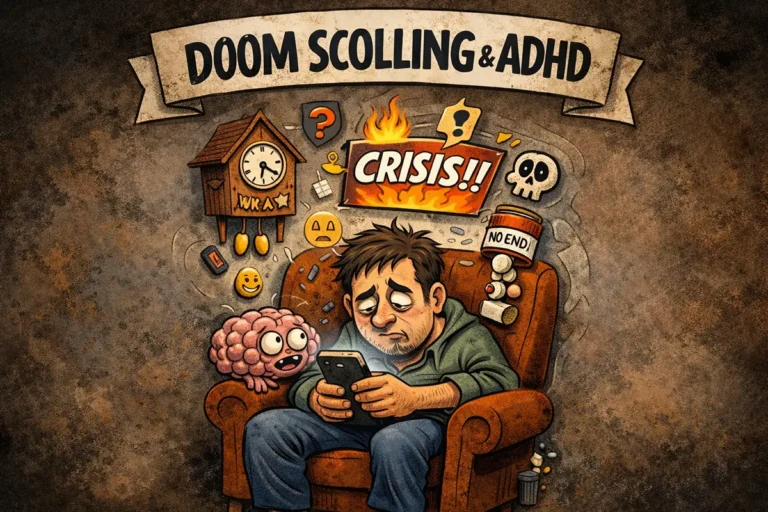
If you have ADHD, doom scrolling isn’t about laziness or poor discipline—it’s what happens when a novelty-seeking brain meets infinite scroll and threat-based content. This post breaks down why ADHD brains are especially vulnerable to doom scrolling, how anxiety can hijack attention, and why shame doesn’t work. Instead of “scroll less” advice, you’ll learn how to change the environment, add real stopping cues, and give your brain somewhere safe to land.
January planning can feel especially heavy if you have ADHD—big goals spark a burst of motivation, then quickly collapse into overwhelm and shame. This post reframes New Year planning through an ADHD-friendly lens, explaining why traditional resolutions fail and how tiny starts, visual rules, and time anchoring create momentum without pressure. Instead of chasing a “new you,” you’ll learn how to design systems that support your brain, reduce friction, and make progress feel possible again.
Many high performers implement digital boundaries perfectly, yet still feel anxious, restless, and unable to truly disconnect. This post explains why behavior change alone can feel like a constant battle, and how chronic nervous system activation drives compulsive phone use. Through a real client story, it shows how somatic work and the BAMBOO Method help the body feel safe offline, making digital wellness strategies sustainable rather than exhausting.
If your evenings keep disappearing into binge-scrolling, streaming, or “just one more episode,” these three simple shifts can help you reclaim real downtime. From using app-based limits, to setting built-in screen boundaries, to filling the digital void with hobbies that genuinely energize you, this guide offers practical changes that actually stick. With bonus tips for navigating kids’ screen habits and emotional transitions, it’s a compassionate roadmap to calmer nights—and a life that finally feels like yours again.
If you’ve tried every digital wellness strategy and still feel restless, anxious, or unable to unplug, the problem isn’t your willpower—it’s your nervous system. In this powerful guest post, resilience coach Amanda Campbell shares how her recovery from paralysis revealed a deeper truth: your body must feel safe before it can disconnect. Through her BAMBOO Method and years of coaching burned-out leaders, she explains why strategies don’t stick and how real resilience begins in the body, not the mind.